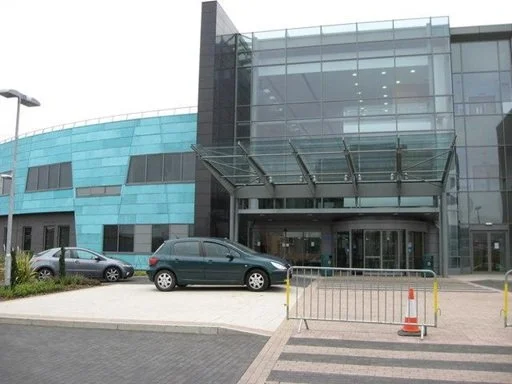
The Northern Centre for Cancer Care at Newcastle's Freeman Hospital. Elsewhere on the hospital campus, pioneering organ-preservation technology is supporting specialist transplant services. Photograph: Ian Porter / Geograph
Groundbreaking technology being used at Newcastle's Freeman Hospital is helping doctors preserve donated organs for longer, assess their suitability for transplantation and offer new hope to patients waiting for life-saving operations.
The technology, developed by medical technology company XVIVO and other specialist organisations, is already being used by transplant teams at the Freeman Hospital in High Heaton, where patients from across the North East and beyond receive specialist treatment.
For residents of Newcastle Great Park, Gosforth, Wideopen and surrounding communities, the developments could have significant implications for people living with serious heart, lung, liver and kidney conditions.
The hospital has already reported successful transplant operations involving the technology, including a landmark kidney transplant in September 2026 and lung transplants supported by its recently established Newcastle Organ Assessment Hub.
The advances come as NHS Blood and Transplant warns that thousands of patients remain on transplant waiting lists and hundreds of people die each year before a suitable organ becomes available.
One of the companies supplying the equipment believes improvements in organ preservation could help transform transplant medicine.
But what does the technology actually do, how is it helping patients in Newcastle, and could it mean more lives being saved in the future?
A medical breakthrough taking place close to Great Park
The Freeman Hospital, situated in High Heaton, is one of the country's leading centres for organ transplantation.
Its Institute of Transplantation provides specialist treatment for patients requiring heart, lung, liver, kidney and pancreas transplants.
The hospital serves not only Newcastle residents but also patients referred from across the North East, Northumberland and other parts of the United Kingdom.
While major advances in transplantation often make national headlines, some of the work helping to develop the next generation of treatment is taking place within Newcastle itself.
The hospital's latest achievement involves sophisticated machines that support donated organs after they have been removed from a donor and before they are transplanted into a recipient.
These systems allow specialist teams to circulate oxygenated blood or specially formulated fluids through organs outside the human body.
Known as machine perfusion, the technique can help preserve an organ's function and give doctors more time to evaluate whether it is suitable for transplantation.
In some circumstances, organs that might previously have been considered too uncertain to use can undergo further assessment.
This could increase the number of donated organs that ultimately become available to patients.
It is particularly important because demand for transplants continues to exceed the number of suitable organs available.
How does the technology actually work?
Traditionally, many donated organs have been transported between hospitals using cold preservation.
After removal from a donor, an organ is cooled and stored in a preservation solution to slow down its metabolism and reduce damage before transplantation.
The process has helped make organ transplantation possible for decades.
However, every organ has a limited preservation period, and deterioration can occur while it is outside the body.
For transplant teams, time is therefore critical.
Doctors must assess the donor organ, arrange transportation, prepare the recipient and complete a highly complex surgical procedure.
Unexpected delays can create additional challenges.
Modern perfusion technology provides another option.
Depending on the organ and the system being used, machines may circulate oxygenated blood or nutrient-rich preservation fluids while carefully controlling conditions such as temperature and pressure.
Some systems keep an organ cool while providing oxygen and nutrients.
Others operate closer to normal body temperature, allowing specialists to observe aspects of how the organ functions.
The process can give surgeons an opportunity to gather information that may not be available through conventional cold storage alone.
For example, doctors may be able to assess whether a donated lung is functioning well enough for transplantation or how a kidney responds to being supplied with oxygenated fluid.
The aim is not simply to keep an organ outside the body for longer, but to make better-informed decisions about whether it can be transplanted safely.
The machines do not guarantee that every donated organ will become suitable for transplantation.
Nor do they eliminate the risks associated with major transplant surgery.
However, they are an important development in the continuing effort to make the best possible use of donated organs.
First UK kidney transplant using new XVIVO technology carried out at Freeman Hospital
One of Newcastle's most significant recent achievements was announced on 23 September 2026.
Surgeons at the Freeman Hospital successfully performed the hospital's first kidney transplant using the new-generation XVIVO Kidney Assist through the Newcastle Organ Assessment Hub.
The operation was also the first kidney transplant in the United Kingdom using this particular generation of the XVIVO system.
The equipment was used to preserve and assess a donated kidney before transplantation.
Surgeons were able to evaluate the organ more thoroughly while it was supported outside the body.
A Newcastle Hospitals patient subsequently received the kidney and was discharged home within a week of the operation.
The successful procedure was performed by transplant surgeons Dr Emily Thompson and Professor Colin Wilson, working alongside a wider team of specialists.
Dr Thompson, an honorary consultant transplant surgeon and senior clinical lecturer at Newcastle University, described the achievement as an important step forward for the programme.
She highlighted the value of being able to assess a donated kidney while providing the nutrients it needs outside the body.
The operation involved specialists across surgery, perfusion, nephrology, anaesthetics and theatre services.
The project was supported by the Northern Counties Kidney Research Fund, which awarded Dr Thompson a research grant to help purchase the XVIVO Kidney Assist equipment.
It demonstrates how medical research, hospital expertise and charitable funding can combine to introduce new treatments into NHS care.
Newcastle Organ Assessment Hub: What is NOAH?
At the centre of the developments is the Newcastle Organ Assessment Hub, known as NOAH.
Based at the Freeman Hospital, the facility brings specialist organ-preservation and assessment technology together to help transplant teams evaluate donated organs.
The hub has already supported transplant procedures involving lungs, livers and kidneys.
The NHS says the technology could help increase the number of organs considered suitable for transplantation by allowing more detailed assessment.
Rather than immediately ruling out a donated organ because doctors cannot be sufficiently confident about its condition, specialist teams may have additional opportunities to investigate its function.
For patients on transplant waiting lists, that could potentially mean a greater chance of receiving a suitable organ.
The Freeman Hospital was also selected by NHS Blood and Transplant as one of 15 pilot sites within a national programme developing assessment and recovery centres.
The pilot is examining how this type of service can be expanded and used more consistently across the NHS.
NHS hopes technology could enable 750 additional transplants a year
NHS Blood and Transplant believes a fully established national network of assessment and recovery centres could eventually enable up to 750 additional life-saving or life-improving transplant operations every year.
That would represent a substantial increase in transplant activity.
However, this figure needs to be understood correctly.
The estimate relates to a potential future UK-wide network, not to 750 extra transplants at Newcastle's Freeman Hospital alone.
It is also a projection, not a figure representing additional operations already completed.
The national programme is currently being developed and evaluated.
Its success will depend on clinical outcomes, available donor organs, specialist staffing, funding and the ability of transplant centres to use the technology effectively.
Nevertheless, the potential is significant.
More donated organs could be assessed rather than declined because of uncertainty or tight transportation deadlines.
This may help reduce the number of suitable organs that cannot be used and create additional opportunities for patients who have been waiting for a transplant.
Lung transplant patient given new hope through Newcastle's technology
For patients and families, the importance of the technology becomes clearer through the experiences of people who have already benefited.
In June 2026, the Freeman Hospital announced that Mark Wrenn had become the first patient to receive a life-saving lung transplant through the new Newcastle Organ Assessment Hub.
Mark had previously worked as a telephone engineer, carrying out physically demanding work that involved climbing and repairing telephone masts.
However, his health deteriorated after he began experiencing breathlessness in 2018.
He was eventually diagnosed with a rare lung condition, obliterative bronchiolitis, alongside an autoimmune disease.
His lung function became severely reduced, and he required permanent oxygen.
Doctors advised him that a lung transplant was his only remaining treatment option.
The donated lungs were assessed using ex-vivo lung perfusion, a technique that allows specialists to evaluate and support lungs outside the body before transplantation.
Mark subsequently underwent a successful transplant using the Freeman's newly established programme.
Following the operation, he began recovering and returning to everyday family life.
His experience illustrates the difference that access to an appropriate donated organ can make.
For someone living with severe lung disease, a transplant can represent the possibility of moving from dependence on oxygen and significant physical limitations towards greater independence.
However, every patient's circumstances are different, and transplant surgery involves major risks and long-term follow-up treatment.
Another patient waited four years for suitable donor lungs
The Freeman Hospital has also shared the experience of Thea Macalpine, a 52-year-old woman from the Scottish Borders.
Thea was born with cystic fibrosis and later developed pulmonary hypertension, a serious condition affecting the blood vessels supplying the lungs.
As her health deteriorated, she became increasingly dependent on oxygen.
She faced an additional challenge because her small stature meant that finding suitably sized donor lungs was particularly difficult.
She spent four years waiting for an appropriate match.
When donor lungs eventually became available, they were assessed through the Newcastle Organ Assessment Hub using ex-vivo lung perfusion.
Thea underwent a successful double lung transplant.
By September 2026, the hospital reported that she had returned to activities including walking and attending the gym as she rebuilt her strength.
Her experience highlights both the difficulties patients can face while waiting for a suitable donor and the opportunities that new assessment techniques may offer.
The technology does not remove the challenge of finding an appropriate donor match.
But it can provide transplant specialists with another way of assessing whether an available organ can safely be used.
Newcastle also pioneered new heart transplant technology
The latest developments build on several years of innovation at the Freeman Hospital.
In May 2023, the hospital announced that Sanjana Kochhar, then aged 29, had become the first patient in the UK to receive a donor heart transported using the XVIVO Heartbox.
Sanjana, originally from Newcastle, had been diagnosed with cardiomyopathy, a condition affecting the heart muscle and its ability to pump blood around the body.
Her condition deteriorated significantly, and she required intensive medical treatment while awaiting a heart transplant.
The Heartbox was used as part of a European clinical trial investigating an alternative method of transporting donated hearts.
Unlike traditional static cold storage, the portable device circulates a specialist solution containing oxygen and nutrients through the donor heart during transport.
The aim is to help preserve the organ's condition before surgery.
Sanjana received her transplant at the Freeman Hospital and subsequently spoke about the enormous difference it had made to her life.
Her operation demonstrated that Newcastle's involvement in organ-preservation technology predates the creation of the new assessment hub.
The hospital has been contributing to research and clinical innovation in this field for several years.
Why demand for transplants remains so high
Despite major advances in medical care, the need for donor organs continues to exceed supply.
According to NHS Blood and Transplant, approximately 4,700 organ transplants took place in the UK during 2025/26.
Yet more than 8,000 people were waiting for an organ transplant at the end of that reporting year.
NHS Blood and Transplant has also reported that more than 430 people died while waiting for a transplant during the year.
Behind those figures are individuals and families living with serious illness and uncertainty.
Patients may spend months or years waiting for a suitable organ.
Some require dialysis or other intensive treatment while they wait.
Others become too unwell to undergo a transplant.
A suitable organ must be available, compatible with the recipient and capable of functioning following surgery.
Age, medical history, existing organ damage and the circumstances of donation can all affect whether an organ is suitable.
This makes it especially important that donated organs are assessed carefully and used wherever it is clinically appropriate to do so.
The new technology being developed in Newcastle is intended to help address part of that challenge.
More than 25,000 people estimated to have chronic kidney disease in Newcastle
The need for improved kidney treatment is particularly relevant locally.
According to Newcastle University, approximately 25,320 people in Newcastle upon Tyne are estimated to be living with chronic kidney disease.
Chronic kidney disease involves a gradual loss of kidney function and can range from relatively mild impairment to severe kidney failure.
Many people with the condition do not require dialysis or transplantation.
Some have few symptoms, particularly in the early stages, and their condition can be managed through monitoring, medication and treatment of related health problems.
However, a smaller number of patients develop advanced kidney failure.
For those individuals, treatment may involve regular dialysis or assessment for a kidney transplant.
The Freeman Hospital's renal services provide specialist kidney care for patients across Newcastle, Gateshead, North Tyneside and Northumberland.
This includes people living in Newcastle Great Park and neighbouring communities.
The development of improved kidney assessment technology could therefore be particularly relevant to families who are already receiving specialist renal care or supporting someone awaiting transplantation.
The figure of 25,320 is an estimate of people living with chronic kidney disease in Newcastle, not the number of local residents waiting for a transplant.
Newcastle joins new £5.2 million kidney transplant research programme
There has also been a further development since the September transplant announcement.
On 23 October 2026, Newcastle University confirmed that its researchers and clinicians at the Freeman Hospital would play a key role in a new £5.2 million national research network called PERFUSE-UK.
The programme is supported by Kidney Research UK and the Stoneygate Trust.
It aims to expand the use and development of normothermic machine perfusion for donated kidneys.
Newcastle will work alongside a central hub in Cambridge and other transplant centres in London, Oxford and Edinburgh.
The technique involves supporting kidneys outside the body at temperatures closer to those normally found in the human body.
This can allow clinicians to examine organ function more closely and potentially develop new ways of preparing suitable kidneys for transplantation.
The research programme is separate from the NHS assessment and recovery centre pilot, although both are working towards improved use of donated organs.
The involvement of the Freeman Hospital means Newcastle will remain part of the national effort to develop and evaluate the technology.
The initiative also strengthens links between Newcastle University, NHS transplant specialists and wider medical research organisations.
What the XVIVO chief executive says about the future
Christoffer Rosenblad, chief executive of Swedish medical technology company XVIVO, has spoken about the importance of improving organ preservation and assessment.
He explained that the company was founded on a vision that "no-one should die waiting for an organ".
The company develops technology intended to support the preservation, evaluation and transportation of donated organs.
Its equipment has been used in heart, lung and kidney transplantation at the Freeman Hospital.
Mr Rosenblad believes extending preservation times could create greater flexibility for transplant teams.
There may be practical advantages in allowing more time to organise transport, prepare recipients and assess donor organs.
In some circumstances, this could help teams avoid unnecessary time pressures and make transplantation more manageable for patients and staff.
However, claims about future cost savings or the scale of improvements in transplant outcomes will require continued research and evaluation.
It is important to distinguish the company's ambitions from results that have already been demonstrated in clinical practice.
The technology is promising, but it is not a guarantee that every patient waiting for a transplant will receive one.
Could the technology help reduce pressure on NHS transplant teams?
Organ transplantation is complex, time-sensitive work.
A suitable organ may become available with relatively little warning, requiring specialist teams to coordinate surgery, transportation, laboratory testing and hospital resources.
Some transplant operations must be organised during evenings, overnight or at weekends.
The ability to preserve organs for longer could provide greater flexibility when organising procedures.
Additional time may allow clinicians to perform more detailed assessments, coordinate teams and make decisions with better information.
This could potentially reduce some logistical pressures associated with transplant surgery.
There may also be financial benefits if organs can be transported more efficiently or if improved assessment reduces the risk of proceeding with unsuitable organs.
However, longer preservation times do not eliminate the need for urgent specialist care.
Different organs have different limits, and the appropriate preservation method depends on the clinical situation.
The cost and effectiveness of perfusion systems must also be considered when planning their wider introduction across the NHS.
The objective is to improve patient outcomes while ensuring that specialist services remain safe, sustainable and accessible.
What does this mean for Great Park residents?
The importance of this development goes beyond the equipment itself.
For local people living with serious health conditions, it represents another area in which specialist treatment is advancing at a hospital serving their community.
Someone living in Newcastle Great Park who develops advanced kidney failure may be referred to the Freeman Hospital for specialist assessment and treatment.
Patients with complex heart or lung conditions may also be referred to the hospital's internationally recognised specialist services.
Not every patient will be suitable for transplantation, and not every transplant will require machine perfusion.
Individual treatment decisions are made by specialist clinical teams according to each patient's circumstances.
Nevertheless, having expertise and advanced technology available within the regional hospital network is important.
The Freeman is not exclusively a local hospital.
Its transplant services receive referrals from across the UK, meaning breakthroughs achieved there can benefit patients far beyond Newcastle.
Equally, patients from Great Park and nearby areas are part of the wider population served by the hospital.
The development of new transplant techniques therefore has genuine local relevance.
Why organ donation still matters
Even the most advanced organ-preservation machine cannot replace the generosity of people who choose to donate organs.
Technology can help doctors make better use of donated organs.
But there still needs to be a suitable donor organ available in the first place.
In England, an opt-out system for organ donation was introduced on 20 May 2020.
Under the system, most adults are considered willing to donate their organs after death unless they have recorded a decision not to donate, are in an excluded group or other circumstances prevent deemed consent from applying.
However, organ donation is not automatic.
Specialist nurses discuss the possibility with families, and the wishes of the person who has died remain central to the process.
People can register a decision to donate, record that they do not wish to donate, or change an existing decision.
The NHS encourages everyone to make their wishes known and discuss them with family members.
Those conversations can be particularly important because donation decisions may need to be considered during extremely difficult circumstances.
How to register your organ donation decision
Residents can register or update their decision through the official NHS Organ Donor Register.
Website:
https://www.organdonation.nhs.uk/
Telephone:
0300 123 23 23
NHS App:
Open your profile and select the option for your organ donation decision.
You can record a decision to donate, not to donate or amend your preferences.
Anyone with questions about organ donation, including medical suitability or concerns relating to personal beliefs, can find further information through the NHS Organ Donation website.
Registering a decision helps families understand what their loved one wanted.
A major step forward – but challenges remain
The achievements at Newcastle's Freeman Hospital offer genuine reasons for optimism.
The hospital has reported successful kidney and lung transplant operations using advanced organ-assessment technology, while its earlier participation in heart preservation trials demonstrates a longstanding commitment to improving transplant medicine.
Its involvement in the national NHS assessment hub pilot and the new PERFUSE-UK research network could help expand these developments further.
However, important challenges remain.
There are still not enough suitable donated organs for everyone who needs one.
Not all organs can be made suitable through machine perfusion.
Transplantation remains major surgery, and recipients require lifelong medical monitoring and, in many cases, medication to prevent organ rejection.
Specialist staff, NHS resources and long-term research will continue to be essential.
The new systems should therefore be viewed as tools that can improve transplant care, rather than a complete solution to the shortage of organs.
Bringing new hope to patients and families across Newcastle
For people waiting for a transplant, every suitable donated organ represents an extraordinary opportunity.
For their families, it may mean the possibility of more time together, greater independence and a return to everyday activities that serious illness has made impossible.
The developments at the Freeman Hospital show how medical innovation can have a direct impact on patients' lives.
From Mark Wrenn's successful lung transplant to the first UK kidney operation using the latest XVIVO Kidney Assist system, Newcastle's specialists are already demonstrating what advanced organ preservation can achieve.
With further investment, research and collaboration, the hope is that more donated organs can be assessed and successfully transplanted in the years ahead.
For residents of Newcastle Great Park and the wider North East, that is a significant development taking place within their regional NHS services.
And for the thousands of people still waiting for a transplant across the UK, it offers something especially important: the possibility of more lives being saved through the precious gift of organ donation.
Have your say
Have you or someone close to you experienced organ transplantation or long-term kidney, heart, lung or liver treatment at the Freeman Hospital?
Were you aware of the pioneering medical technology being developed and used in Newcastle?
Do you believe more should be done to raise awareness of organ donation and the importance of discussing our wishes with family members?
Great Park Gazette welcomes readers' experiences and views.
Please remember that medical experiences can be deeply personal. Residents are encouraged to respect patients' privacy when discussing individual circumstances.
Sources and further reading
Newcastle Hospitals NHS Foundation Trust
First kidney transplant through the Newcastle Organ Assessment Hub – 23 September 2026
Thea receives life-saving lung transplant – 24 September 2026
Newcastle patient first in UK to receive heart transported in XVIVO Heartbox – 22 May 2023
NHS Blood and Transplant
Newcastle University
Editorial note: This article distinguishes the successful transplant procedures already reported at the Freeman Hospital from projected improvements associated with further research and national expansion. The estimate of up to 750 additional transplants per year relates to a potential fully established national network, not an increase already achieved or a prediction for the Freeman Hospital alone. Medical information is provided for general public understanding and does not replace individual advice from NHS specialists.

