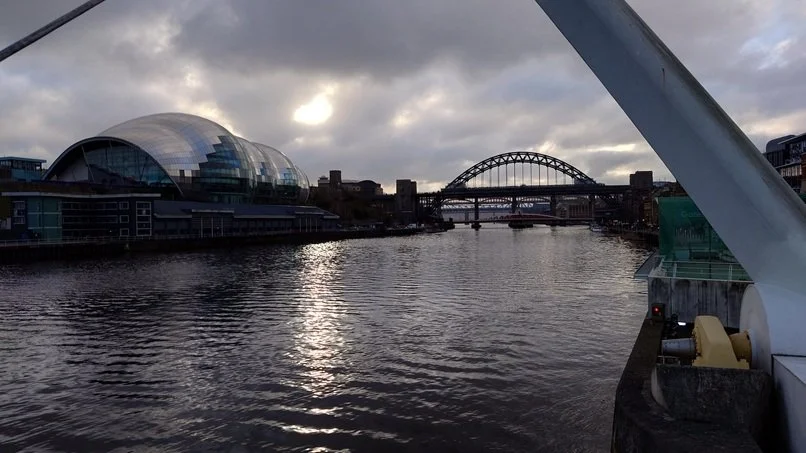
Newcastle/Gateshead quayside
Newcastle and Gateshead could undergo one of the biggest transformations in their modern history under an ambitious regeneration blueprint stretching to 2050, with plans for thousands of new homes, two additional bridges across the River Tyne, improved transport connections, major leisure attractions and the possibility of a new home for Newcastle United.
An extensive new masterplan has outlined how the heart of Tyneside could change over the next 25 years, with billions of pounds of investment potentially reshaping everything from Newcastle city centre and the Quayside to Gateshead town centre, Ouseburn and the western banks of the Tyne.
The draft Strategic Regeneration Framework (SRF), unveiled on 13 October 2026, has been developed through a partnership involving Newcastle City Council, Gateshead Council, the North East Mayoral Strategic Authority and Homes England.
It identifies eight major areas for regeneration, with the combined potential for around 16,000 additional homes, more than three million square feet of commercial space and significant investment in transport, employment, culture and public spaces.
Among the headline ambitions are two new pedestrian bridges across the Tyne, water taxis, a new railway station, improvements to the Central Motorway corridor, redevelopment around Gateshead's former flyover and a world-class football stadium.
However, the proposals are part of a long-term vision rather than a collection of approved and fully funded construction projects. Many will require further consultation, investment, detailed planning applications and agreements between public authorities and private developers.
For residents of Newcastle Great Park and surrounding communities, the proposals could eventually influence how people travel into the city, where they work, the facilities they use and how the wider Newcastle area develops.
Why Newcastle and Gateshead are planning such major changes
Newcastle and Gateshead already form one of the North East's most important economic centres, supporting approximately 118,000 jobs.
According to the regeneration framework, the central urban area is currently home to around 32,000 residents, with approximately 10,000 homes and a substantial student population.
The area also attracts an estimated 17.5 million visitors annually, generating approximately £2.47 billion in visitor expenditure.
Despite these strengths, planners believe substantial opportunities remain to bring more people into the city centre, regenerate underused land and improve connections between neighbourhoods.
Rather than viewing Newcastle and Gateshead as two separate places, the framework proposes treating their central areas as one interconnected economic and cultural destination.
The ambition is to encourage more people to live centrally, improve access to employment and public transport, and make better use of former industrial and commercial sites.
North East Mayor Kim McGuinness has highlighted the importance of ensuring regeneration produces better jobs, more housing, thriving high streets and improved connections between neighbourhoods.
Newcastle City Council leader Councillor Colin Ferguson has also linked the proposals to the council's ambition of making Newcastle the UK's most successful regional capital.
Gateshead Council leader Councillor Nick Allan has emphasised that investment must deliver practical benefits for residents, including better homes, jobs and opportunities.
The framework divides the transformation into eight distinct areas, each with its own priorities.
1. Tyne Heart: New bridges, waterfront attractions and a major arena
One of the most ambitious elements focuses on the historic heart of Newcastle and Gateshead, including Newcastle Quayside, the Castle Keep, Gateshead's Railway Quarter and Gateshead Quays.
Known as Tyne Heart, the proposals aim to make the River Tyne a more integrated destination for culture, entertainment, housing and leisure.
The area could accommodate approximately 1,500 new homes, including developments around Gateshead Old Town Hall and Brett Wharf.
A major priority is the long-standing ambition to deliver a new arena on Gateshead Quays, helping attract concerts, performances and major events to the waterfront.
The framework also considers water taxis operating along the Tyne, potentially offering another way for residents and visitors to travel between riverside destinations.
Further proposals include improved riverside seating, public art, attractive lighting, outdoor event spaces and better pedestrian connections.
The intention is to encourage activity throughout the day and evening rather than relying primarily on office workers, weekend visitors and the existing leisure economy.
The regeneration would aim to preserve the character of Newcastle's historic Quayside while allowing Gateshead's waterfront to develop its own distinctive identity.
For residents who regularly visit the Quayside, the changes could eventually create more places to eat, socialise, attend events and enjoy the river.
2. Newcastle City Core: A major transformation of shopping streets and commercial areas
Newcastle's traditional city centre is also earmarked for extensive regeneration.
This area stretches from Central Station through Grainger Town and Grey's Monument towards Haymarket, incorporating Eldon Square, Pilgrim Street and surrounding commercial districts.
The framework identifies opportunities for approximately 1,000 additional homes and one million square feet of commercial floorspace.
One of the most significant proposals concerns the New Bridge Street area, where residential accommodation, hotels and leisure facilities could form part of a major redevelopment.
The plans also identify the potential demolition and redevelopment of Higham House.
Elsewhere, the strategy seeks to breathe new life into Grainger Town by bringing vacant or underused upper floors of historic buildings back into productive use.
These spaces could potentially accommodate residential, commercial or other suitable uses, helping increase activity beyond traditional shopping hours.
Improving the city centre's transport infrastructure is another priority.
The framework includes proposals for the refurbishment of Monument Metro station, one of the busiest interchange points on the Tyne and Wear Metro network.
Further regeneration around Pilgrim Street, New Bridge Street and Manors is intended to create modern workplaces while retaining Newcastle's distinctive historic architecture.
For shoppers, workers and visitors, the overall aim is to create a city centre that offers more than retail, combining employment, leisure, housing and public spaces.
3. Gateshead town centre: Thousands of homes and the transformation of the former flyover
Gateshead town centre could experience some of the most dramatic physical changes proposed anywhere in the framework.
The demolition of the A167 Gateshead flyover has created a significant opportunity to reconsider the road network and the land previously occupied by the structure.
The regeneration vision identifies the potential for approximately 2,000 new homes across areas including Gateshead Interchange, Oakwellgate and the former flyover corridor.
Rather than simply replacing the previous road layout, planners want to create new neighbourhoods with homes, businesses, improved pedestrian routes and public spaces.
One proposal involves a green corridor along parts of the former flyover route, combining planting, landscaped areas and improved public access.
The plans also include improvements to the area around Gateshead High Street and Trinity Square.
Gateshead Interchange could undergo refurbishment, while better walking and cycling connections would improve access across the town centre.
Potential upgrades to Jackson Street and Coulthards Lane are also identified, alongside improvements to east-west connections.
The overall objective is to make Gateshead a more attractive place to live, work and visit, with its own identity rather than simply functioning as an extension of Newcastle city centre.
If delivered, the changes could represent a major shift away from the road-dominated layout that has characterised parts of central Gateshead for decades.
4. Boulevard and Stadium: Could Newcastle United get a new world-class home?
Perhaps the most high-profile element of the entire regeneration framework concerns the future of Newcastle United's stadium.
The area surrounding St James' Park, Newcastle Helix, Newcastle College and Leazes Park has been identified as a major opportunity for sport, education, employment and leisure.
The framework supports the ambition for a world-class football stadium, but importantly does not commit to either expanding St James' Park or constructing an entirely new ground.
Both possibilities remain open.
The future of Newcastle United's stadium has been a major talking point among supporters, particularly as the club considers how best to increase capacity and modernise its facilities.
The regeneration framework acknowledges the importance of football to Newcastle's international profile while recognising the need for wider improvements to the surrounding area.
Potential developments include approximately 1,000 additional homes, including residential construction associated with the continued development of Newcastle Helix.
Improved pedestrian connections could also make it easier to travel between St James' Park, Leazes Park, Newcastle College and Central Station.
Another possibility is the creation of a combined transport hub, potentially improving how people travel into the area for football matches, concerts and other major events.
The wider ambition is to ensure the district remains busy and economically active beyond matchdays.
However, no final stadium location or design has been selected through this framework, and any future project would require separate decisions, investment and planning processes.
5. Eastern Gateway: Major changes around Manors, Shieldfield and the Central Motorway
The Eastern Gateway area covers parts of Shieldfield, Battlefield, New Bridge Street and the streets surrounding Manors Metro station.
The regeneration proposals aim to improve connections between the eastern side of Newcastle city centre, established residential neighbourhoods and the Ouseburn.
Approximately 1,000 new homes could be developed in the area, alongside improvements to existing residential communities.
The framework identifies opportunities for more intensive development around Manors and New Bridge Street, supported by better public spaces and transport links.
It also includes possible improvements to City Stadium park and stronger pedestrian connections towards the Quayside.
One particularly interesting proposal involves overcoming barriers created by the Central Motorway.
The motorway currently separates parts of the city centre from surrounding neighbourhoods, limiting straightforward walking and cycling connections.
The framework suggests new crossings and improved routes could help reconnect these areas.
Better east-west walking, wheeling and cycling links between Manors, New Bridge Street and Ouseburn are also proposed.
Further student accommodation may be considered, although the strategy indicates this should reflect demonstrated demand and the needs of existing communities.
For people travelling between Newcastle city centre and the east of the city, these changes could eventually make journeys more convenient and create a less fragmented urban environment.
6. Innovation Quarter: Universities, healthcare and a greener Central Motorway
The Innovation Quarter brings together several of Newcastle's most important institutions.
It includes Newcastle Civic Centre, Newcastle University, Northumbria University, the Royal Victoria Infirmary and Exhibition Park.
The ambition is to establish an internationally recognised district focused on education, research, healthcare and innovation.
One of the potential developments is the planned North East Space Skills and Technology Centre, supporting opportunities in advanced technology and specialist industries.
The framework also seeks to improve connections between the universities, medical facilities, Newcastle Helix and surrounding neighbourhoods.
Enhanced access to Exhibition Park and the Town Moor is another priority, recognising the importance of green spaces within a growing city.
Perhaps one of the most significant long-term ideas involves examining whether parts of the Central Motorway could become greener.
The strategy suggests investigating how a potential reduction in through-traffic might allow sections of the motorway corridor to be transformed over time.
Such changes would require substantial further investigation, particularly regarding traffic movement, public transport and the wider road network.
For commuters, including those travelling into Newcastle from Great Park, proposals affecting the Central Motorway could be particularly important.
However, the framework does not currently establish a funded scheme, confirmed road closures or a timetable for such changes.
7. Western Urban Villages: Nearly 4,000 homes and another bridge across the Tyne
To the west of Newcastle city centre, large former industrial and commercial sites could be transformed into entirely new residential neighbourhoods.
Known as the Western Urban Villages, this area includes Forth Yards, Quayside West and land around the former Elswick leadworks site.
It also incorporates Gateshead's Clasper Village and Askew Road areas.
The framework identifies the potential for approximately 3,750 additional homes across these locations.
One major ambition is to create a series of connected riverside neighbourhoods with improved access to green spaces, walking routes and public transport.
A particularly notable proposal is a new pedestrian bridge across the Tyne close to the existing Redheugh Bridge.
If developed, the crossing could improve links between Newcastle's western riverside and Gateshead, giving residents additional options for travelling between both sides of the river.
The plans also include the proposed Scotswood Line linear park, making use of the former railway corridor alongside Scotswood Road.
Better connections to Gateshead Riverside Park and improved access to the waterfront are further priorities.
Rather than developing isolated housing estates, the vision is to create communities connected by parks, public spaces and routes along the river.
The Forth Yards area is already recognised as one of Newcastle's most significant long-term development opportunities, with extensive brownfield land available for regeneration.
8. Eastern Urban Villages: Up to 6,000 homes, a new railway station and another river crossing
The largest proposed housing allocation within the eight regeneration areas is found to the east of the city centre.
The Eastern Urban Villages area includes Ouseburn, Malmo Quay, Spillers Quay, Gateshead's Baltic Quarter and land extending towards Byker and Gateshead Stadium.
The framework identifies opportunities for approximately 6,000 new homes, potentially transforming substantial sections of the eastern waterfront.
The ambition is to build on the regeneration already seen around Ouseburn, where former industrial buildings have increasingly been converted into creative workspaces, hospitality venues and residential developments.
Further investment could introduce new homes, employment space, cultural facilities and improved public access to the Tyne.
One of the most eye-catching proposals is a new pedestrian bridge linking Spillers Quay on the Newcastle side with the South Shore Road area of Gateshead.
This would create an additional crossing between the eastern waterfronts, potentially making it easier to access businesses, leisure attractions and residential neighbourhoods on both banks.
The framework also proposes more continuous walking and cycling routes along the river.
Improved connections towards Gateshead Stadium are identified, alongside the possibility of a new Gateshead East railway station.
Such a station could provide an additional transport connection for developing neighbourhoods, although further feasibility work, investment and approvals would be required.
The scale of potential housing development means transport capacity, healthcare, education and other community facilities will be important considerations as detailed plans emerge.
Two new bridges and water taxis could change how people cross the Tyne
Taken together, the proposals identify two possible new pedestrian bridges across the River Tyne.
One would be located in the west, near the Redheugh Bridge, while the other would connect Spillers Quay with the South Shore Road area in the east.
Both crossings could make it easier to travel between Newcastle and Gateshead without relying on existing road bridges or longer walking routes.
The framework also raises the possibility of water taxis serving riverside destinations.
Although details of routes, operating arrangements and potential fares have not been established, such a service could eventually provide another way to travel between waterfront attractions and neighbourhoods.
These proposals form part of a broader strategy to improve walking, cycling and public transport while making Newcastle and Gateshead feel like a more connected urban centre.
What could the proposals mean for Newcastle Great Park residents?
Although Newcastle Great Park is not itself one of the eight central regeneration areas, the proposed changes could still have significant implications for people living in the neighbourhood.
Many Great Park residents regularly travel into Newcastle city centre for work, shopping, education, healthcare, entertainment and sporting events.
Improvements to Monument Metro station, potential new transport hubs and better city-centre pedestrian connections could therefore benefit residents travelling into Newcastle.
The longer-term possibility of changes to the Central Motorway is particularly relevant.
For those who drive into the city, any future reduction in road capacity or changes to traffic arrangements would need to be carefully assessed against the availability of practical alternative routes and public transport services.
Likewise, major new housing developments could increase demand on transport networks, healthcare, schools and other facilities.
This is an issue Great Park residents will recognise.
The community has experienced long-running concerns about the relationship between housing development and the delivery of promised infrastructure.
As the wider Newcastle and Gateshead regeneration programme moves forward, ensuring that new homes are supported by appropriate transport, services and community facilities will be an important test of its success.
The plans could bring substantial economic benefits, including employment opportunities, new businesses, cultural attractions and improvements to public spaces.
But their long-term success will depend not simply on how many new properties are constructed, but on whether the necessary infrastructure and services are delivered alongside them.
How will the plans be funded?
The framework has been developed with the ambition of attracting billions of pounds of public and private investment over the coming decades.
However, there is an important distinction between identifying development opportunities and securing the money required to deliver them.
Projects such as new river crossings, railway stations, major transport changes and large-scale residential developments would require detailed business cases and appropriate funding arrangements.
Some regeneration schemes may attract private investment, while others could depend on government support, regional funding or partnerships between different organisations.
The Strategic Regeneration Framework is intended to help authorities coordinate those decisions and provide a clearer direction for potential investors.
It does not mean every project has already received funding or that construction will begin immediately.
The timescale extends to 2050, meaning individual proposals may evolve considerably as economic conditions, funding priorities and community needs change.
What happens next?
The draft framework is due to be considered by Newcastle City Council, Gateshead Council and the North East Mayoral Strategic Authority.
Gateshead Council's Cabinet is scheduled to consider the regeneration framework on Tuesday 20 October 2026.
The North East Mayoral Strategic Authority has also listed a Cabinet decision concerning the framework for 27 October 2026.
The next major stage is expected to involve public and stakeholder consultation, giving residents, businesses and community organisations opportunities to comment on the proposals.
Following consultation, the framework may be revised before being presented for final approval.
Even after adoption, individual developments would still be subject to relevant planning procedures, funding decisions and other statutory requirements.
The document is intended to guide regeneration and investment rather than automatically grant planning permission for the developments it identifies.
A once-in-a-generation opportunity — but delivery will be the real test
There is little doubt that the proposals represent an ambitious vision for the future of Newcastle and Gateshead.
The prospect of thousands of new homes, improved riverside connections, regenerated town centres, a modernised transport network and major new cultural and sporting facilities could dramatically change the appearance and character of Tyneside over the next quarter of a century.
Some proposals, such as the new bridges and potential water taxis, could make the River Tyne a more accessible part of everyday life.
Others, including the future of St James' Park and the transformation of Gateshead town centre, could reshape areas that generations of local people have known for decades.
However, ambitious masterplans also bring questions about affordability, transport capacity, local services and whether the infrastructure needed to support growth will arrive when required.
For residents of Newcastle Great Park and the wider North East, these considerations are just as important as the buildings themselves.
The real measure of success will be whether the vision delivers better-connected communities, accessible housing, improved services and lasting opportunities for existing residents as well as those moving into the region.
By 2050, Newcastle and Gateshead could look very different. The challenge now is turning an ambitious vision on paper into practical improvements that people across Tyneside can genuinely benefit from.
What do you think of the proposals? Would you welcome new bridges across the Tyne, a potential new Newcastle United stadium and thousands of additional homes? Or are you concerned about whether transport and infrastructure will keep pace with development?
The Great Park Gazette welcomes residents' views on what Newcastle and Gateshead should prioritise over the next 25 years.
Sources and further information
- [Newcastle City Council – New long-term masterplan for Newcastle and Gateshead unveiled (13 October 2026)](https://new.newcastle.gov.uk/news/2026/new-long-term-master-plan-heart-newcastle-gateshead-unveiled)
- [Newcastle and Gateshead – Draft Strategic Regeneration Framework (87-page PDF)](https://gateshead.moderngov.co.uk/documents/s50765/Newcastle%20and%20Gateshead%20Mayoral%20Development%20Zone%20B.pdf)
- [Gateshead Council – Cabinet agenda, 20 October 2026](https://gateshead.moderngov.co.uk/ieListDocuments.aspx?MId=4383)
- [North East Mayoral Strategic Authority – Strategic Regeneration Framework decision details](https://northeast-ca.moderngov.co.uk/mgIssueHistoryHome.aspx?IId=1121&Opt=0)

