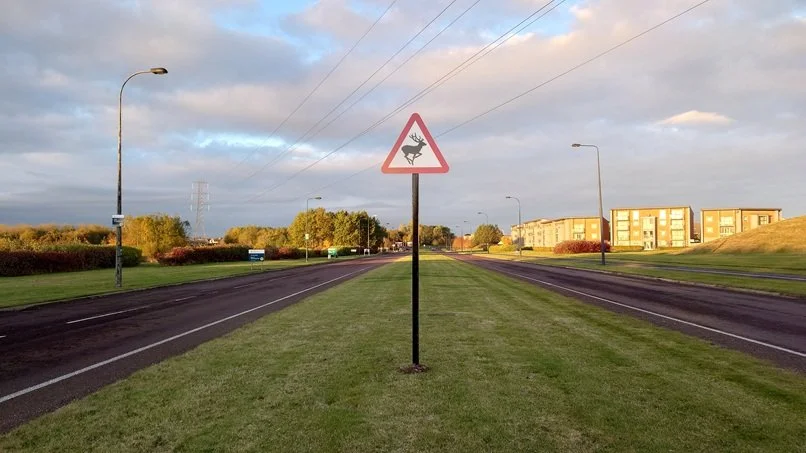
Great Parkway – just west of the junction with the A1 northbound off-slip road
Three new deer warning signs have now been installed on roads around Newcastle Great Park, marking a significant victory for a community-led wildlife protection campaign spearheaded by local resident Jules Robinson and supported by councillors, wildlife organisations and fellow residents.
The new signs are designed to alert motorists to the possibility of deer crossing the road, encouraging drivers to remain vigilant and reduce their speed where necessary to protect both wildlife and road users.
The installations follow months of persistent campaigning, correspondence and discussions involving Newcastle City Council, local councillors, wildlife organisations and members of the Great Park community.
For residents who have spent considerable time calling for better protection for Great Park's deer population, the arrival of the signs represents a welcome and tangible result.
Where have the new deer warning signs been installed?
The three signs have been installed at the following locations:
- Brunton Lane – just west of the junction with Polwarth Road.
- Great Parkway – just west of the junction with the A1 northbound off-slip road.
- Roseden Way – just north of the roundabout junction with Kingston Park Road.
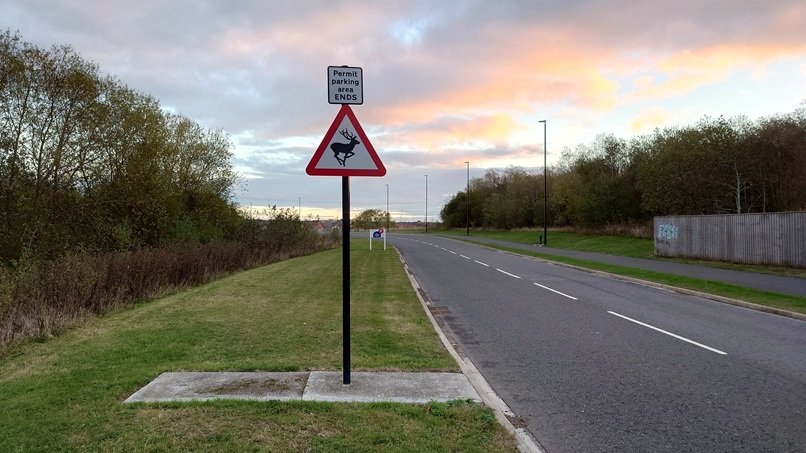
Roseden Way – just north of the roundabout junction with Kingston Park Road
These roads provide important connections into and around Newcastle Great Park and pass through or close to areas where wildlife may be present.
The distinctive triangular warning signs feature a deer silhouette, alerting motorists to the possibility of deer entering or crossing the carriageway.
Drivers are encouraged to take particular care, especially during the early morning and evening when deer can be more active.
Deer can move unexpectedly onto roads, and collisions can have serious consequences for both the animals and vehicle occupants.
The signs are intended to improve awareness and encourage motorists to drive cautiously through areas where deer may be encountered.
From campaign promises to signs on the ground
The installation represents the successful completion of an important stage of a campaign that has been progressing for several months.
On 26 August 2026, the Great Park Residents Group shared positive news that progress had been made towards securing roadside deer warning signs following sustained discussions with Newcastle City Council and other organisations.
At that stage, the proposed signs on Brunton Lane and Roseden Way had received approval, while the Great Parkway location was still awaiting developer approval.
The announcement was welcomed by residents across Great Park, Greenside and Melbury, many of whom had raised concerns about deer crossing local roads and the risks posed by passing traffic.
The campaign was subsequently covered in greater detail by the Great Park Gazette on 2 October 2026, in an article titled Great Park wildlife signage campaign gains support as residents push for action.
At the time, the three roadside signs were progressing through the ordering and installation process.
Now, just over two weeks after that article was published, all three signs have been installed.
It marks a significant achievement for those who have worked to bring the issue to the attention of the people and organisations able to take action.
Jules Robinson's persistence makes a difference
At the heart of the campaign has been Great Park resident Jules Robinson, whose determination and commitment to protecting local wildlife have played a central role in bringing about the installations.
Jules has been campaigning for improved wildlife signage for a considerable period, repeatedly contacting Newcastle City Council, its Traffic Management team, local councillors, parish councils and other relevant organisations.
Her work has involved raising awareness of the dangers facing deer, identifying areas of concern, following up correspondence and ensuring that residents' concerns continued to be heard.
The Great Park Residents Group has previously acknowledged that Jules has been the driving force behind the campaign.
She has dedicated considerable time and effort to pursuing practical improvements, often working behind the scenes to keep discussions moving.
The installation of the three signs is a direct and visible result of that persistence.
It demonstrates the difference that one determined resident can make when supported by a wider community.
The Great Park Gazette would like to recognise and thank Jules for her dedication, patience and continued efforts to improve wildlife protection across Great Park.
Without her determination in pursuing this issue, the campaign may not have achieved the progress residents are now seeing.
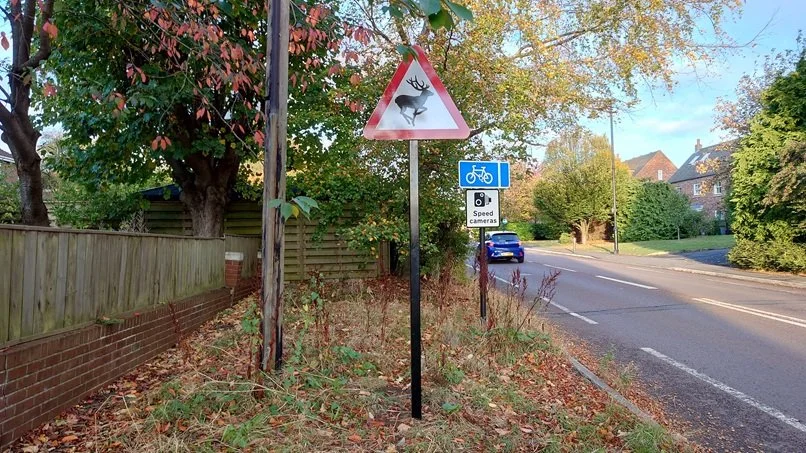
Brunton Lane – just west of the junction with Polwarth Road
Councillors and wildlife organisations have supported the campaign
Although Jules has spearheaded the campaign, the progress achieved has also involved support from several other individuals and organisations.
Councillor Donna Rawling, Vice-Chair of North Gosforth Parish Council, has supported the campaign, participated in discussions and helped raise the issue through the parish council.
Councillor David Down has also been supportive, discussing concerns with residents and helping explore possible solutions.
Councillor David Partington, who represents Parklands and North Gosforth, has provided support and been involved in efforts to move the issue forward.
Rachel Locke of Save Newcastle Wildlife has contributed her knowledge and experience of wildlife conservation, supporting calls for better signage and greater awareness of the pressures facing animals in urban environments.
Lucy Ingham, Communities Officer at Northumberland Wildlife Trust, has listened to residents' concerns, provided advice and offered support in helping the campaign progress.
The Great Park Residents Group administrator has also been involved in discussions and correspondence with relevant organisations, helping coordinate concerns and raise awareness within the community.
Thanks must also go to Newcastle City Council and its Traffic Management team for progressing the roadside warning signs through the necessary processes and arranging their installation.
And importantly, thanks are due to the many residents who reported deer sightings, identified potential wildlife hotspots, shared information, supported the campaign or added their names to the petition calling for better protection.
The achievement demonstrates what can happen when residents, councillors and wildlife advocates work together towards a common goal.
Why protecting Great Park's deer matters
Newcastle Great Park is fortunate to have an extensive network of green spaces, woodland, wetlands and wildlife corridors that support a variety of animals.
Deer are regularly seen in and around parts of the development, particularly near woodland and open spaces.
For many residents, seeing deer in their natural surroundings is one of the things that makes living at Great Park special.
However, as residential development expands and traffic increases, wildlife can face additional challenges when moving between habitats.
Roads can create barriers between feeding areas, woodland and other green spaces, increasing the risk of animals encountering vehicles.
Wildlife campaigners have repeatedly highlighted the importance of maintaining safe wildlife corridors and ensuring that development takes account of existing animal populations.
While warning signs cannot prevent every collision, they provide an important reminder that drivers are travelling through areas shared with wildlife.
Even a small increase in awareness could help motorists react more safely when animals are nearby.
Save Newcastle Wildlife highlights wider concerns
In the Great Park Gazette's previous coverage, Rachel Locke of Save Newcastle Wildlife explained that the problems facing deer and other animals around Great Park form part of a much wider challenge across Newcastle.
She warned:
"Wildlife is being forced into ever decreasing areas in Newcastle, as green spaces and wildlife corridors are paved over or fenced off."
Rachel has highlighted concerns about habitat loss, fragmented wildlife corridors, road collisions and disturbance caused by people and domestic pets.
She has also previously called for unnecessary fencing to be removed from wildlife corridors and raised concerns about the use of glyphosate herbicides across areas of Great Park.
Her organisation has been campaigning for greater wildlife awareness and protection for several years.
The new roadside signs represent progress, but conservation campaigners continue to argue that protecting wildlife requires a broader approach to managing green spaces and future development.
The campaign isn't over – more wildlife signs are still needed
While the installation of the three roadside deer signs is an important milestone, it does not resolve all the concerns raised by residents.
The Great Park Residents Group and those supporting the campaign are continuing to push for additional wildlife protection and responsible dog ownership signage within the estate's green and open spaces.
Residents have previously reported concerns about:
- Dogs chasing deer and other wildlife.
- Dogs being allowed to run uncontrolled through sensitive habitats.
- Dog fouling being left in public open spaces.
- A lack of signs reminding people to respect and protect local wildlife.
- Disturbance to animals living in or moving through Great Park's green spaces.
Campaigners are keen to emphasise that the overwhelming majority of dog owners act responsibly and care about the local environment.
The aim is not to criticise responsible dog owners but to encourage greater awareness among those whose actions may unintentionally or otherwise disturb wildlife.
Clearly positioned signs reminding people to keep dogs under control around wildlife and to clean up after their pets could help protect animals while ensuring residents can continue enjoying Great Park's open spaces.
Further discussions with land management organisations
One of the challenges facing the wider campaign is that many of Great Park's open spaces are privately managed rather than being maintained directly by Newcastle City Council.
This means responsibility for approving and installing signage within these locations differs from the arrangements for public highways.
Kingston Open Spaces was contacted in April with requests for additional dog fouling, responsible dog ownership and wildlife protection signage.
As reported in the Great Park Gazette's article on 2 October, repeated correspondence had not resulted in a substantive response at that stage.
Newcastle Great Park Management Company had also been contacted regarding the possibility of installing additional signs within the estate's green spaces, but no response had been received when the earlier article was published.
The campaign continues to seek progress with the organisations responsible for managing these areas.
The successful installation of the three roadside signs will hopefully provide further encouragement as residents continue pursuing these outstanding concerns.
Drivers urged to watch out for deer
With all three new warning signs now installed, motorists travelling around Newcastle Great Park are being encouraged to pay particular attention to their surroundings.
Deer can appear suddenly, particularly near woodland, hedgerows and open fields.
Anyone driving through the affected areas should:
- Observe the speed limit and slow down when conditions require.
- Remain alert for deer near the roadside.
- Take extra care around dawn and dusk.
- Remember that more than one deer may be present.
- Avoid sudden swerving that could put other road users at risk.
The warning signs do not mean deer will always be present, but they provide an important reminder of the potential hazard.
By remaining alert and driving appropriately, motorists can help reduce the risk of collisions and protect the wildlife that shares the local environment.
A genuine community success story
What began as concerns raised by individual residents has developed into a coordinated community effort involving local people, councillors, wildlife organisations and public authorities.
The installation of the three signs shows that persistence, cooperation and continued communication can produce positive results.
For Jules Robinson, whose campaign has involved months of correspondence and determination, seeing the signs finally installed marks an important achievement.
For other residents who have supported the campaign, it provides reassurance that their concerns about wildlife safety have been heard.
And for the deer and other animals living around Great Park, the signs represent another step towards making people more aware of the need to share roads and green spaces responsibly.
The Great Park Gazette would once again like to thank Jules Robinson for spearheading the campaign, everyone who has supported her efforts, and Newcastle City Council for progressing the installations.
However, there is still work to be done.
The campaign for additional wildlife protection and responsible dog ownership signage within Great Park's green spaces continues, and residents are encouraged to keep supporting those efforts.
Great Park is fortunate to have wildlife living alongside its communities. Protecting it is a responsibility we all share.
The Great Park Gazette will continue following the campaign and reporting on further progress.
Previous coverage
Read our earlier article published on 2 October 2026:
[Great Park wildlife signage campaign gains support as residents push for action](https://www.greatparkgazette.co.uk/news/great-park-wildlife-signage-campaign)
Residents can also continue supporting the wildlife signage petition shared through the Great Park Residents Group.
Sources
- Great Park Residents Group campaign update, 26 August 2026.
- Great Park Gazette, Great Park wildlife signage campaign gains support as residents push for action, 2 October 2026.
- Information supplied by the Great Park Residents Group regarding the installation of the three new signs.
- [Newcastle Great Park – Nature and wildlife](https://www.newcastlegreatpark.com/nature/).

