Concerns raised over condition of the Ouseburn beneath the A1 near Melbury
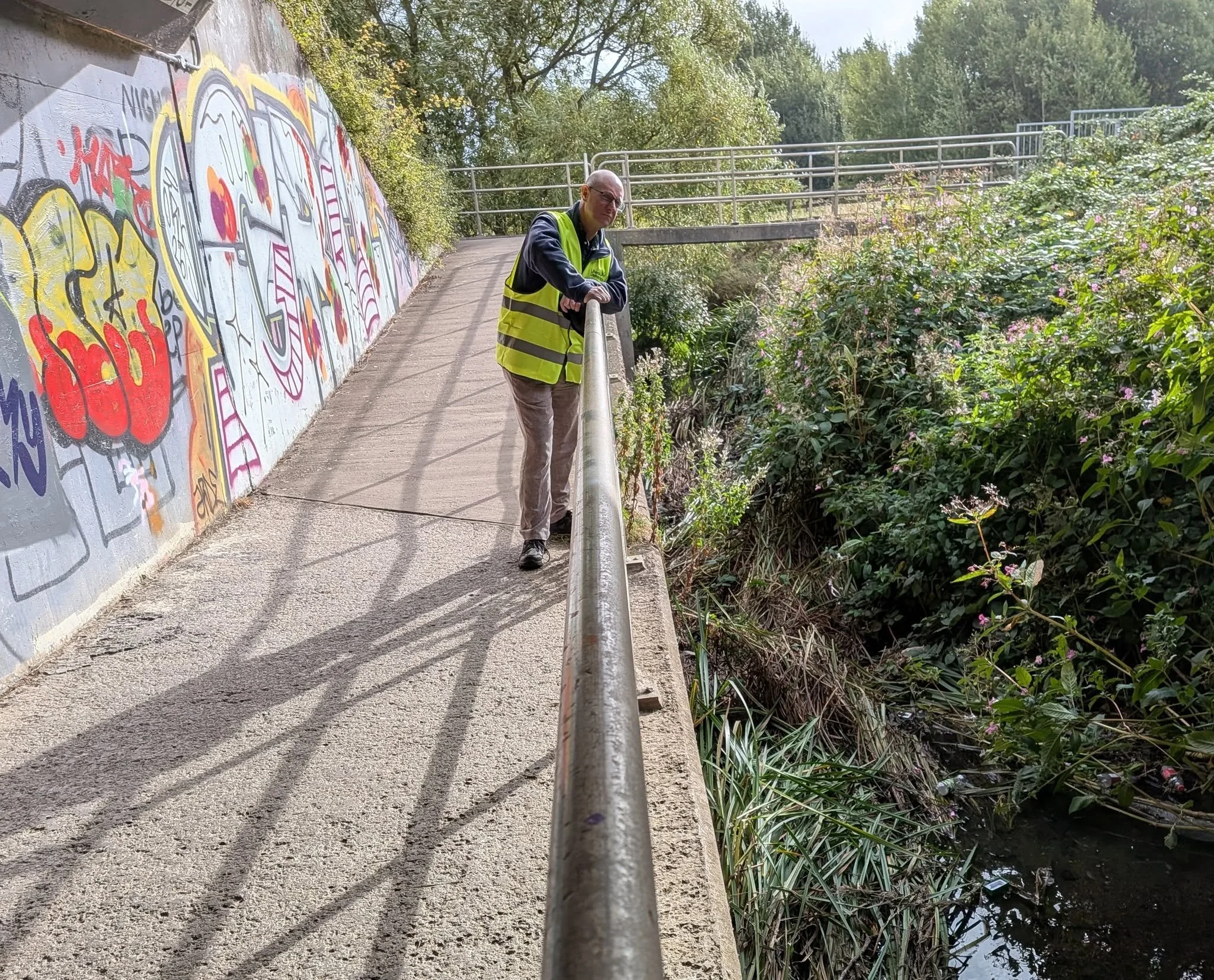
Councillor David Partington
Concerns have been raised about the condition of the Ouseburn where it passes beneath the A1 near Melbury, with local councillors warning that heavy vegetation and restricted water flow could potentially create problems during periods of intense rainfall.
The issue was highlighted following a site visit in September involving local representatives, including Councillor David Partington and Councillor David Down.
Photographs from the visit show the watercourse near the pedestrian route beneath the A1, where substantial vegetation can be seen growing around and within the channel.
The Parklands and North Gosforth Ward Liberal Democrat Focus Team subsequently reported that Councillor David Partington was concerned about the state of the Ouseburn beneath the A1 from Melbury.
At the time of the visit, the amount of water flowing through the channel was described as little more than a trickle.
The concern is not necessarily the amount of water present during dry conditions, but what could happen when the area experiences a sudden period of heavy rainfall.
Dense vegetation and other material within or immediately alongside a watercourse can potentially restrict the movement of water. If debris accumulates or the channel becomes obstructed, there are concerns that water could back up during a significant downpour and increase the risk of localised flooding.
Councillor Partington and Castle Ward Councillor David Down said they intended to raise the issue with the various authorities that have responsibility for the Ouseburn and surrounding infrastructure.
WHY THE OUSEBURN MATTERS
The Ouseburn is much more than the watercourse most people associate with the lower Ouseburn Valley closer to Newcastle city centre.
Its wider catchment extends through the north of Newcastle, including areas around Great Park, Melbury and Red House Farm.
Water from a large surrounding area eventually enters the Ouseburn system, meaning what happens further upstream can have consequences elsewhere in the catchment.
The area also contains an extensive network of Sustainable Drainage Systems, commonly known as SuDS, which were incorporated into Newcastle Great Park.
These wetlands, ponds, reed beds and drainage areas are designed to help manage surface water while also creating valuable habitats for wildlife.
Newcastle Great Park describes the Melbury wetland as an area containing extensive reed beds. These reeds provide habitat for birds and also help filter pollutants from water.
The wider Great Park landscape includes wetlands, woodland, drainage corridors and the former wagonway, which now serves as a public footpath and wildlife corridor.
A HISTORY OF FLOODING CONCERNS
Flood management in the upper Ouseburn catchment is not a new issue.
The Environment Agency, Newcastle City Council, Newcastle University, Northumbrian Water and other organisations have previously carried out significant work looking at flooding within the Ouseburn catchment.
A major study followed serious flooding in the Red House Farm area in June 2005.
According to Environment Agency research, that event affected 84 properties and resulted in 24 families having to leave their homes for periods of up to two months.
Subsequent studies examined ways of improving drainage capacity and using Sustainable Drainage Systems within and around Great Park to store and manage water more effectively.
Historic Ouseburn catchment work has also looked specifically at the potential for using the SuDS at Melbury Park to help attenuate and clean flows within the water system.
A1 DRAINAGE WORK HAS PREVIOUSLY TAKEN PLACE
The relationship between the A1, surface water drainage and the Ouseburn has previously required intervention.
In 2022, National Highways carried out drainage works beside the A1 between junctions 79 and 78.
The project involved directing surface water runoff from part of the A1 into a nearby Sustainable Drainage System pond rather than allowing it to enter the Ouseburn directly.
National Highways said assessments had found that some runoff entering the Ouseburn was below ideal water-quality standards.
The drainage system was therefore designed to allow the SuDS pond to help remove hydrocarbons, sediment and heavy metals before the water continued through the wider drainage network.
The work also required the temporary closure of a nearby public footpath.
This history demonstrates that drainage around the A1 and Ouseburn is already a recognised part of the area's infrastructure.
WHO IS RESPONSIBLE?
One of the complications with watercourses such as the Ouseburn is that responsibility can involve several different organisations depending on the precise location and nature of the problem.
Newcastle City Council advises that concerns involving flooding from the River Tyne or Ouseburn can be reported to the Environment Agency.
Other drainage infrastructure may fall under the responsibility of landowners, Newcastle City Council, Northumbrian Water, National Highways or other organisations.
That is why Councillors Partington and Down said they would raise the issue with the different authorities responsible for the Ouseburn.
Establishing exactly which organisation is responsible for vegetation management, clearance and maintenance at this particular location will therefore be an important part of determining what happens next.
WHY RESIDENTS MAY WANT THIS MONITORED
For much of the year the water beneath the A1 may appear relatively insignificant, particularly during prolonged dry weather.
However, drainage systems are most severely tested during short periods of intense rainfall.
Residents across Great Park will be familiar with the amount of water that can collect in local wetlands, ponds and drainage areas following prolonged or heavy rain.
The concern raised during this visit is therefore preventative: whether vegetation and possible obstruction within the channel should be dealt with before unusually heavy rainfall exposes a problem.
It is important to stress that the photographs themselves do not establish that flooding will occur, nor do they demonstrate that the channel is currently incapable of carrying flood water.
The issue being raised is whether the condition of the watercourse warrants inspection and preventative maintenance.
LOCAL REPRESENTATIVES RAISING THE ISSUE
Councillor David Partington represents Parklands and North Gosforth Ward, which includes Melbury and Warkworth Woods.
Councillor David Down represents Castle Ward, which includes Newcastle Great Park.
Their involvement means the issue crosses the boundary between two neighbouring council wards but concerns a watercourse and drainage network that ultimately connects the wider area.
The Great Park Residents Group welcomed the visit and thanked those involved for continuing to pursue local environmental and infrastructure issues.
WHAT HAPPENS NEXT?
The next step is for the relevant authorities to consider the concerns and establish whether any clearance, inspection or maintenance work is required.
Residents will be particularly interested to know:
• Which organisation is responsible for this section of the Ouseburn
• Whether the watercourse has recently been inspected
• Whether vegetation or debris is restricting the channel
• Whether clearance work is required
• How frequently this section is maintained
• Whether the structure beneath the A1 has sufficient capacity during periods of intense rainfall
• Whether the surrounding SuDS network is operating as intended
• Whether any further flood-prevention measures are planned
Great Park Gazette will continue to follow the issue and provide further updates if action is taken.
The Ouseburn, its wetlands and the Sustainable Drainage Systems around Great Park play an important role both in managing water and supporting wildlife.
Ensuring those systems remain properly maintained is therefore important not only for flood resilience, but for the long-term environmental health of the area.
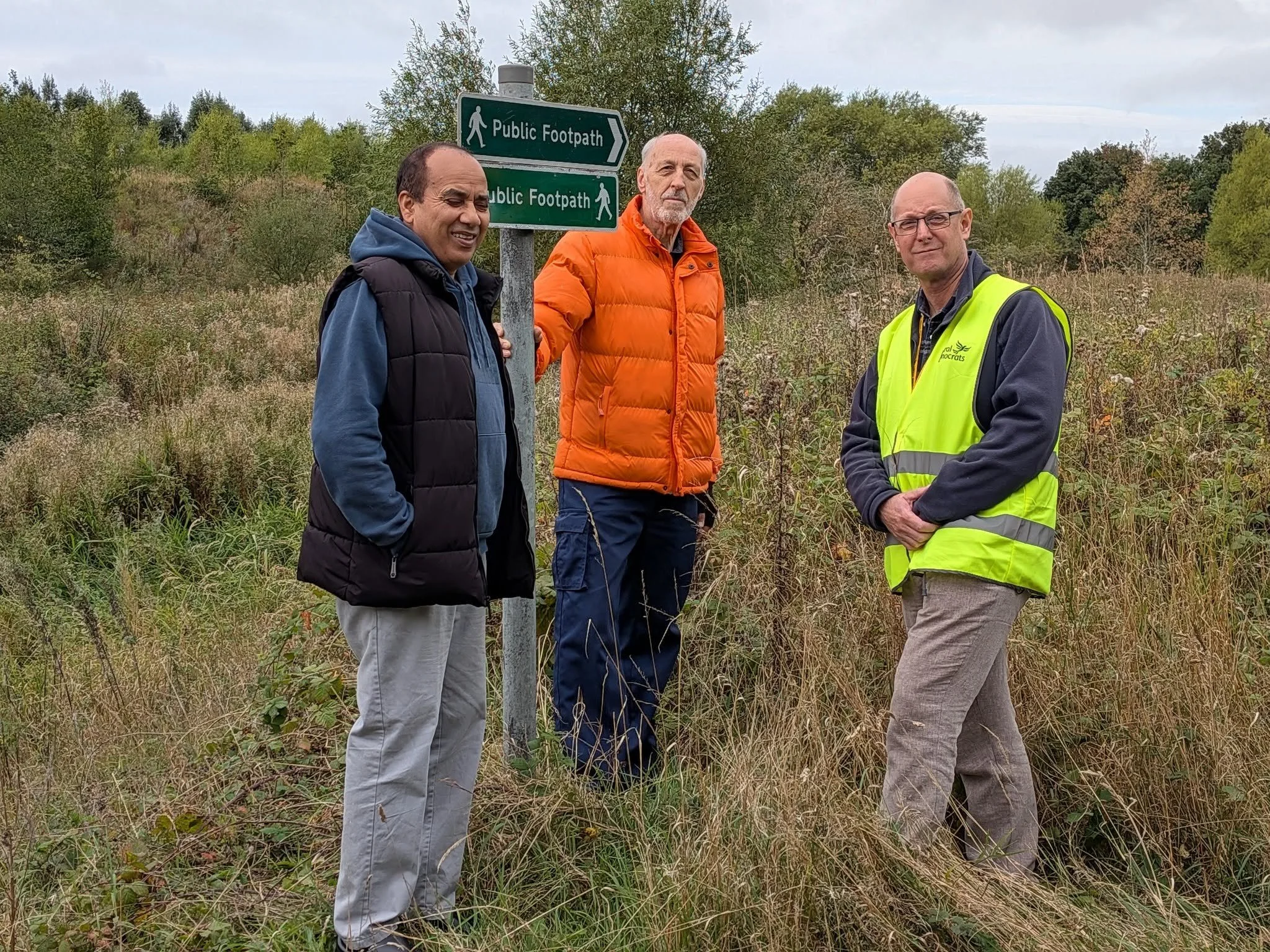
Dr. Dhananjay Singh, Councillor David Down and Councillor David Partington
