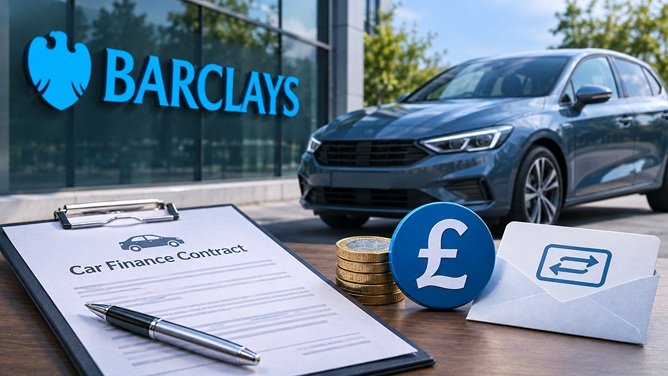
Barclays is reportedly preparing to offer early compensation payments to some former car finance customers, as millions of UK motorists await the outcome of legal challenges to the Financial Conduct Authority's wider £9.1 billion redress scheme
Thousands of motorists across Newcastle and the wider North East could be affected by a significant development in the ongoing car finance mis-selling scandal, with Barclays reportedly preparing to become the first major UK bank to offer compensation payments to some customers before the conclusion of a major legal challenge.
The move could see former car finance customers receiving offers within days, despite uncertainty surrounding a nationwide compensation scheme expected to return billions of pounds to motorists who were treated unfairly.
Barclays is preparing to write to a limited number of borrowers whose cases are considered particularly strong.
The development comes as the Financial Conduct Authority (FCA) continues to defend its motor finance compensation scheme against legal challenges that could delay payments for millions of other customers until well into 2027.
For residents of Newcastle Great Park, Gosforth and surrounding communities, the news raises an important question: Could you be entitled to compensation for a car you purchased on finance, even if the agreement ended years ago?
Barclays preparing to make early compensation offers
Barclays is understood to be preparing compensation offers for a relatively small group of former motor finance customers, potentially making it the first major UK lender to move ahead with settlements while the wider compensation scheme remains partially suspended.
The bank intends to contact selected borrowers within days, with the offers representing a small proportion of its estimated £430 million provision for motor finance mis-selling.
The reported payments are expected to focus on cases involving particularly serious commission arrangements or undisclosed relationships between car finance providers and brokers.
These are sometimes referred to as "Johnson cases", following litigation involving the disclosure of commission arrangements in motor finance agreements.
Such cases can involve substantial commissions paid to dealers or brokers that customers were not adequately informed about.
Barclays had previously acknowledged that it was considering making early payments to certain eligible groups of customers rather than waiting for the legal process to conclude.
However, as of Monday afternoon, Barclays had not publicly confirmed the precise number of customers who would receive offers, the individual compensation amounts or the exact timetable.
The reported move should therefore not be interpreted as confirmation that every eligible Barclays customer will receive money immediately.
What is the car finance mis-selling scandal?
The controversy centres on the way some car dealerships and finance brokers earned commission when arranging loans for customers buying vehicles.
For many years, motorists purchasing new or used cars were offered finance agreements through dealerships.
These commonly included Personal Contract Purchase (PCP) and Hire Purchase (HP) arrangements.
However, customers were not always adequately informed about the financial relationships between dealers, brokers and lenders.
In some cases, dealerships could receive higher commissions by arranging loans with more expensive interest rates.
This created a potential conflict of interest because the dealer could benefit financially from a customer paying more for their borrowing.
Other agreements involved substantial commission payments or exclusive arrangements between lenders and brokers that were not properly disclosed.
The FCA has concluded that many customers were treated unfairly and has introduced a compensation scheme intended to address the problem.
Importantly, not every agreement involving commission was necessarily mis-sold.
Whether compensation is due depends on the particular arrangements, the disclosures made to the customer and the rules applicable to the agreement.
Could you be entitled to compensation?
The FCA's scheme covers certain motor finance agreements entered into between 6 April 2007 and 1 November 2024.
This means residents could potentially have a claim relating to a vehicle purchased almost 20 years ago.
You may be affected if:
You bought a new or used car using PCP finance.
You purchased a vehicle through a Hire Purchase agreement.
You financed a motorbike, van or certain other motor vehicles.
Your agreement involved a commission arrangement that was not adequately disclosed.
A dealer or broker had an undisclosed financial relationship with the lender.
Your finance agreement has already ended and the vehicle has since been sold or replaced.
The regulator estimates that approximately 12.1 million agreements across the UK could qualify for compensation.
However, eligibility is not automatic.
The FCA scheme excludes some types of borrowing and arrangements, including Personal Contract Hire (PCH) leasing, certain high-value loans, some business agreements and agreements where no interest was charged.
People who have already accepted compensation or had their complaint decided through certain formal processes may also be excluded.
If you purchased several vehicles using finance during the relevant period, each agreement may need to be considered separately.
How much compensation could motorists receive?
The Financial Conduct Authority estimates that successful claimants will receive an average of approximately £830 per eligible finance agreement.
That figure is an average, not a guaranteed payment.
Some motorists may receive substantially more, while others may receive considerably less or nothing at all.
In the most serious cases, compensation could include repayment of the full commission, together with interest.
For many other eligible agreements, compensation will be calculated using a formula based on the estimated financial loss and the commission paid, with interest added.
The precise amount depends on the individual finance agreement and the applicable compensation rules.
The FCA has estimated that approximately £7.5 billion could ultimately be returned to consumers under its scheme.
The wider estimated cost to the motor finance industry, including administration and other associated expenses, is around £9.1 billion.
These national figures should not be confused with Barclays' separate reported £430 million provision.
Why are millions of customers still waiting?
Although the FCA introduced its compensation scheme in March 2026, its implementation has been disrupted by legal challenges.
Volkswagen Financial Services, Mercedes-Benz Financial Services, Crédit Agricole Auto Finance and Consumer Voice have challenged aspects of the regulator's arrangements.
The legal challenges have resulted in parts of the scheme being suspended while the Upper Tribunal considers the arguments.
The hearing is scheduled to take place between 16 February and 3 March 2027.
A judgment is expected in the months following the hearing.
Depending on the outcome, there could be further delays or changes to the compensation process.
The FCA has indicated that payments under the nationwide scheme are expected to begin in 2027 if the scheme is upheld and the decision is not appealed.
In the meantime, lenders are expected to continue identifying potentially affected agreements, gathering relevant information and preparing to deal with claims.
Barclays' reported decision to offer early settlements to a limited group of customers is therefore a significant development, but it does not mean the wider legal dispute has been resolved.
What should Great Park residents do now?
Residents who have previously purchased vehicles using PCP or Hire Purchase finance should consider checking whether their agreements fall within the relevant period.
The FCA says customers can complain directly to their lender free of charge.
There is no requirement to employ a solicitor or a claims management company simply to register a complaint.
1. Check your previous finance agreements
Start by looking through paperwork or emails relating to cars you have purchased since April 2007.
Documents may include finance agreements, monthly statements, settlement letters or correspondence from the company that provided the loan.
Remember that the company arranging finance at the dealership may have been different from the company that actually lent you the money.
2. Identify the finance provider
If you cannot remember who financed your vehicle, the FCA suggests checking:
Previous bank statements for monthly finance payments.
Old credit agreements or dealership paperwork.
Your credit report, which may identify historic finance providers.
The dealership where you originally purchased the vehicle.
The FCA's official website also provides information to help customers identify their lenders.
3. Contact your lender directly
Once you have identified the finance company, you can contact it to ask whether your agreement involved potentially unfair commission arrangements.
You can register a formal complaint even if you no longer have the vehicle or the agreement has finished.
The FCA provides complaint information and lender contact details at:
https://www.fca.org.uk/consumers/car-finance-complaints
You do not need to know the precise commission amount before contacting your lender.
4. Keep a record of your complaint
If you submit a complaint, keep copies of any emails, letters and reference numbers.
This will help if you need to follow up or challenge a decision.
Because the national compensation scheme is subject to legal proceedings, some customers may have to wait longer than originally anticipated for a final response.
5. Check any compensation offer carefully
If Barclays or another lender contacts you offering compensation, read the information carefully before accepting.
Make sure you understand how the amount has been calculated and whether accepting the payment would settle your complaint in full.
If you disagree with a decision, the Financial Ombudsman Service may be able to review your case.
Important dates for people who have already complained
Although part of the compensation scheme has been suspended, some lenders must still respond to customers who are found not to qualify.
Under the FCA's current arrangements:
18 November 2026: Certain customers whose agreements began on or after 1 April 2014 and who complained by 30 June 2026 should receive a response if the lender concludes they are not owed compensation.
18 January 2027: A corresponding deadline applies to certain customers whose agreements began before 1 April 2014 and who complained by 31 August 2026.
There are exceptions, including some disputes involving time limits and particular contractual relationships.
These dates are not general payment deadlines.
Customers who do not receive a letter by these dates should not assume they are automatically entitled to compensation.
People who have not yet complained can still raise their concerns directly with their lender.
Beware of car finance compensation scams
With billions of pounds potentially at stake, the FCA has warned that criminals are attempting to exploit public interest in car finance compensation.
Some fraudsters have reportedly contacted motorists pretending to represent legitimate lenders or the regulator itself.
Residents should be particularly cautious about unexpected calls, text messages and emails promising immediate compensation.
The FCA advises customers to verify communications using contact details independently obtained from their lender's official website.
Never disclose online banking passwords, security codes or PINs to someone claiming to arrange compensation.
Nor should residents assume they must pay an upfront fee to receive money they are legally entitled to.
Claims management companies and law firms can charge fees, potentially taking up to 36% of any compensation received.
For straightforward complaints covered by the FCA's process, motorists can contact their lender directly without paying these charges.
Anyone uncertain about a message should contact the relevant finance company through its established customer service channels rather than using links or telephone numbers contained in an unexpected message.
What if you have already made a claim?
Many motorists across the UK have already registered complaints through finance providers, solicitors or claims management companies.
If you have already submitted a complaint, there may be no need to submit another one covering the same agreement.
Instead, check that your existing claim is properly recorded and ensure the lender or your representative has your current contact details.
Residents who have instructed a claims management company should review the terms of their agreement before accepting an offer directly from a lender, as fees or contractual obligations may still apply.
The FCA has also warned against signing agreements with multiple claims companies, which could create additional charges and complications.
Why does this matter to Newcastle Great Park residents?
For many families living in Newcastle Great Park, Gosforth, Kingston Park, Wideopen and surrounding communities, a car is an essential part of everyday life.
Commuting to work, taking children to school, shopping and travelling across the North East often mean households depend on one or more vehicles.
Over the years, many residents will have purchased several cars through dealerships, using finance arrangements that appeared entirely routine at the time.
Some may now discover that the terms of those agreements involved undisclosed commissions or relationships that could give rise to compensation.
A payment averaging around £830 could make a meaningful difference to household finances, particularly as families continue to manage the cost of everyday living.
However, it is important to maintain realistic expectations.
The announcement concerning Barclays does not mean every former customer will receive a payment this week, nor does it establish that every historic car finance agreement was unfair.
The most important step for potentially affected residents is to understand their rights and use the free official complaints process.
What happens next?
Attention will now turn to whether Barclays begins issuing compensation offers as reported and whether other major lenders decide to adopt a similar approach.
The Financial Conduct Authority is also expected to clarify its expectations for lenders considering settlements before the wider scheme is fully implemented.
For most customers, the crucial milestone remains the Upper Tribunal hearing beginning in February 2027.
Until the legal position becomes clearer, motorists should be cautious about claims promising guaranteed payments or immediate refunds.
Great Park Gazette will continue to follow developments affecting motorists across Newcastle and the wider North East.
Have your say
Have you previously purchased a car using PCP or Hire Purchase finance?
Have you already submitted a complaint about undisclosed commission, or are you still waiting to hear from your lender?
Perhaps you have received correspondence from Barclays or another finance provider about potential compensation.
We would be interested to hear about residents' experiences, particularly whether lenders are beginning to contact customers with settlement offers.
Please remember not to share personal financial information, account numbers or claim references publicly.
Research and further reading
Financial Conduct Authority – Car finance claims and how to complain
Financial Conduct Authority – Motor finance compensation scheme
Financial Conduct Authority – Motor finance legal challenge hearing dates
Financial Conduct Authority – Motor finance scheme partially suspended
Editorial note: Barclays' reported plans to offer early settlements are based on information published on 2 November 2026. The bank had not publicly confirmed individual payment arrangements when that report was published. Compensation eligibility and payment calculations are governed by the applicable regulatory and legal arrangements, which remain subject to ongoing proceedings. This article provides general consumer information, not individual financial or legal advice.

