Five night-sky events to watch for this autumn
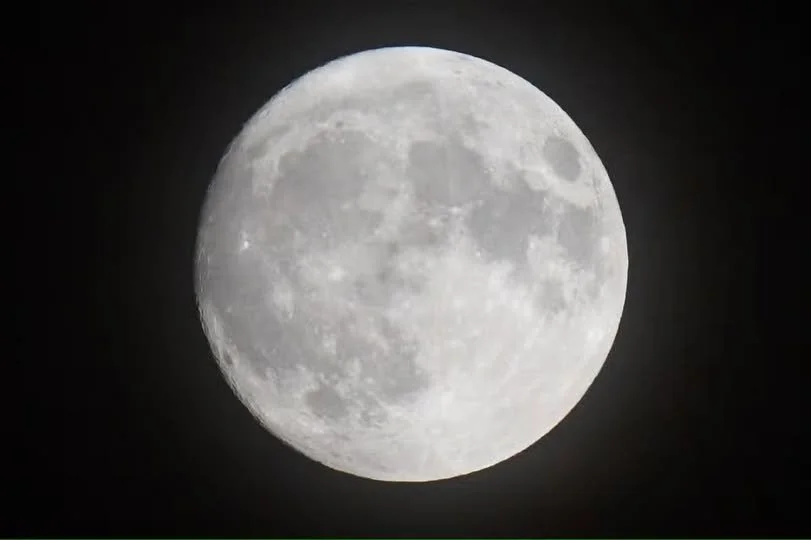
Moon
The Met Office has highlighted five sky events to look out for during the remaining months of 2026, including two meteor showers, a planetary alignment and a supermoon.
With the darker evenings setting in, here’s what residents can look out for during October and November.
1. THE PLEIADES – AUTUMN EVENINGS
The Pleiades, also known as the Seven Sisters, should be visible on autumn evenings.
The Met Office says to look towards the eastern sky, describing the Pleiades as one of the easiest and most recognisable star clusters to spot.
Although the name “Seven Sisters” suggests seven stars, Royal Museums Greenwich says the cluster actually contains more than 1,000 stars.
Most people can usually see around six of them with the naked eye, although people with particularly good eyesight may be able to spot more.
The stars have a distinctive blue colour because of their high temperatures.
The Pleiades are visible from the Northern Hemisphere between October and April and can be seen throughout the night during November and December, making those months particularly good for spotting them.
2. ORIONID METEOR SHOWER – 21ST TO 22ND OCTOBER
The Orionid meteor shower comes from debris associated with Halley’s Comet.
According to the Met Office, the best time to look is before dawn.
Royal Museums Greenwich says the Orionids will be active from 2nd October until 7th November in 2026.
The shower is expected to peak on the night of 21st October, with the best viewing period between midnight and dawn.
Meteors should also be visible for several days either side of the peak.
3. PLANETARY ALIGNMENT – 22ND OCTOBER
There should also be an interesting planetary line-up on 22nd October.
The Met Office says:
Mercury
Venus
Jupiter
Saturn
will appear lined up in the pre-dawn sky.
So anyone up early on 22nd October may want to have a look.
4. LEONID METEOR SHOWER – 17TH TO 18TH NOVEMBER
The Leonid meteor shower is produced as Earth passes through debris left behind by Comet Tempel-Tuttle.
Royal Museums Greenwich describes the Leonids as usually being one of the more prolific annual meteor showers, with fast and bright meteors.
In 2026, the Leonids are expected to be active between 6th and 30th November.
The peak is expected overnight on 17th November.
5. BEAVER SUPERMOON – 24TH NOVEMBER
November’s full moon will also be a supermoon.
The Met Office says the Beaver Moon on 24th November will be the first in a run of four consecutive supermoons.
A supermoon happens when a full moon occurs while the Moon is relatively close to Earth in its orbit, making it appear larger and brighter than usual.
The November full moon is traditionally known as the Beaver Moon.
Royal Museums Greenwich says there are different explanations for the name. One suggests it comes from the time of year when beaver traps were traditionally set, while another links it to increased beaver activity as they build their dams ahead of winter.
It is also sometimes known as the Frost Moon.
DATES FOR YOUR DIARY
Pleiades
Visible on autumn evenings, particularly good during November and December
Orionid Meteor Shower
Peak: 21st–22nd October
Planetary Alignment
22nd October
Leonid Meteor Shower
Peak: 17th–18th November
Beaver Supermoon
24th November
Obviously, how much we can see from Great Park will depend on cloud cover and viewing conditions on the night, but there are certainly a few dates worth putting in the diary.
If we get clear skies for any of them, hopefully residents will be able to get some good photos from around Great Park.
Which one are you most looking forward to seeing?
