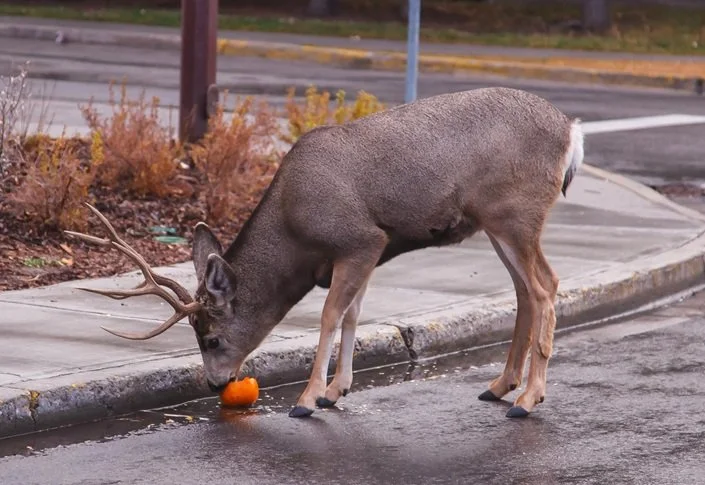
Deer with pumpkin. Photo: Murray Foubister / Wikimedia Commons
With Halloween approaching, Great Park residents may be tempted to leave old pumpkins on grass, in woodland or near areas where deer are regularly seen, believing they will provide a useful source of food for local wildlife.
However, wildlife organisations are advising people not to dump leftover pumpkins for deer or other wild animals.
The British Deer Society says pumpkins are not a natural food source for most wildlife and warns that unfamiliar foods can cause digestive problems. Regular feeding can also encourage wild deer to become dependent on people and may draw animals together around feeding areas.
Aren’t pumpkins good for deer?
Deer may eat pumpkin if they come across it, but that does not mean residents should deliberately leave pumpkins out for them.
The British Deer Society advises that wild deer generally do not need supplementary feeding because they are usually able to find the food they require naturally.
It also warns that a deer’s digestive system can take time to adapt to unfamiliar foods and recommends that wild deer should not be encouraged to eat material that is not part of their normal diet.
So while pumpkin itself should not simply be described as “poisonous to deer”, the advice from deer specialists is clear: leaving piles of pumpkins out specifically to feed wild deer is not recommended.
This is particularly relevant around Newcastle Great Park, where deer are regularly seen in and around woodland, open spaces and neighbouring areas.
Hedgehogs are a particular concern
Discarded pumpkins can present a more immediate problem for hedgehogs.
The Woodland Trust warns that hedgehogs are not designed to eat large quantities of fruit. Eating too much pumpkin can cause stomach problems and diarrhoea, potentially leading to dehydration.
That is especially concerning in autumn, when hedgehogs are trying to build up sufficient reserves before winter hibernation.
The RSPCA gives similar advice, telling people not to leave leftover pumpkin on the ground because it can be dangerous for some wildlife, including hedgehogs.
Rotting and decorated pumpkins can cause other problems
There are other reasons not to dump Halloween pumpkins in woodland or open spaces.
The British Deer Society warns that carved pumpkins may still contain candles, plastic decorations or other materials that could be swallowed by animals.
Rotting pumpkins can also attract rats and other unwanted pests and may affect woodland plants, fungi and soils when large quantities are discarded in natural areas.
The RSPCA also warns that decorated or rotting pumpkins can be harmful to a range of wildlife.
What should you do with your pumpkin instead?
There are several better options once Halloween is over.
Residents can:
• use edible pumpkin flesh in cooking before carving
• compost the pumpkin at home
• cut up fresh, undecorated pumpkin for composting
• turn a fresh pumpkin into a bird feeder positioned off the ground
• remove any uneaten pumpkin before it begins to rot or go mouldy
The Woodland Trust suggests using fresh pumpkins as bird feeders before adding them to the compost heap once they begin to deteriorate.
If a pumpkin has contained candles, paint, glitter, plastic decorations or other non-food materials, these should all be removed before composting.
Helping Great Park wildlife
It is understandable that residents want to do something positive for Great Park’s deer and other wildlife, particularly during the colder months.
But in this case, leaving Halloween pumpkins in woodland, hedgerows or open spaces is not the best way to help.
The British Deer Society’s wider advice is that wild deer should be allowed to forage naturally, should not be hand-fed and should be given plenty of space.
For hedgehogs, providing access between gardens, leaving natural areas undisturbed and offering appropriate food and fresh water are safer ways of helping.
So when Halloween is over this year, the message is simple:
Enjoy your pumpkin — but don’t dump it for the deer.

