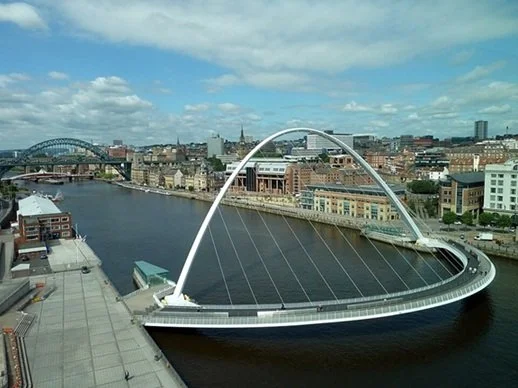
The River Tyne, Tyne Bridge and Gateshead Millennium Bridge, linking Newcastle and Gateshead. A new 25-year Strategic Regeneration Framework proposes major investment in housing, employment, transport and public spaces across both city centres. Residents can comment on the draft until 6 January 2027. File photograph: JimmyGuano / Wikimedia Commons
Residents across Newcastle Great Park and the wider North East are being invited to help shape the future of Newcastle and Gateshead as a major public consultation opens on a proposed 25-year regeneration plan.
The Newcastle and Gateshead Strategic Regeneration Framework (SRF) sets out an ambitious vision for how the centres of both cities, the River Tyne waterfront and surrounding areas could change between now and 2050.
The proposals include thousands of new homes, major investment in employment and commercial developments, improvements to public transport, better walking and cycling connections, and the regeneration of important sites on both sides of the Tyne.
There are also ambitions for new parks and public spaces, cultural attractions, leisure facilities and opportunities for businesses.
The framework has been prepared jointly by the North East Mayoral Strategic Authority, Newcastle City Council and Gateshead Council, bringing together their long-term priorities for the heart of the region.
The public consultation opened on Friday 6 November 2026 and will run until Wednesday 6 January 2027.
Although Newcastle Great Park itself is outside the geographical area covered by the framework, residents who regularly travel into Newcastle city centre or Gateshead for work, shopping, education and entertainment could be affected by the changes proposed.
And with the consultation open to people from across the region, Great Park residents have an opportunity to make their views known before the plan is finalised.
What Is the Strategic Regeneration Framework?
The Strategic Regeneration Framework is a long-term plan for the area described as the Newcastle and Gateshead Urban Core.
This covers Newcastle city centre, Gateshead town centre, the River Tyne waterfront and neighbouring districts that play a major role in the region's economy.
The Urban Core contains many of the North East's most important employment, transport, retail, education and cultural destinations.
These include Newcastle Central Station, the Quayside, St James' Park, major university campuses, shopping areas, office districts and attractions on both sides of the river.
The new framework aims to coordinate regeneration and investment across the whole area, rather than considering individual development sites in isolation.
The intention is to help the councils, the Mayor and other partners identify where new homes, businesses and infrastructure should be prioritised over the coming decades.
The strategy could help guide future funding bids, development proposals and public investment decisions.
However, it is important to understand that the framework is currently a draft and is not itself planning permission or a commitment that every proposed project will be built.
Individual developments would still need to secure the appropriate approvals, funding and delivery arrangements.
Why Are Newcastle and Gateshead Planning Together?
Newcastle and Gateshead are separate local authority areas, but their town and city centres are closely connected.
Thousands of people travel across the River Tyne for employment, shopping, education and leisure.
The two areas also share major transport networks, economic opportunities and cultural attractions.
The new framework aims to encourage a more coordinated approach to these shared challenges.
By planning development across both sides of the river, the authorities hope to make better use of available land, improve transport connections and attract additional investment.
The North East Mayoral Strategic Authority says this is the first time the North East Mayor and the two councils have developed a single shared vision of this kind for the future of the Urban Core.
The intention is to create a stronger economic centre while preserving the history, identity and character that make Newcastle and Gateshead distinctive.
Thousands of New Homes Could Transform the City Centres
One of the biggest ambitions involves substantially increasing the number of people living within Newcastle and Gateshead's central areas.
According to Newcastle City Council, the Urban Core currently contains approximately 32,000 residents living in around 10,000 homes, with students making up a significant proportion of the population.
The proposed framework seeks to at least double the area's residential population over the coming decades.
Reports examining the wider draft proposals describe an ambition to deliver more than 16,000 additional homes across the Urban Core over the period to 2050.
These are long-term development ambitions rather than approved housing numbers.
A key objective is to provide a greater variety of homes, including properties that are suitable and affordable for different types of households.
This could help attract more permanent residents into areas that have traditionally been dominated by commercial buildings, shops, offices and student accommodation.
Supporters of the approach argue that bringing more residents into city centres could help businesses by generating activity throughout the day and evening.
It could also encourage investment in local services, public spaces and transport.
However, a significant expansion in the number of city-centre homes would raise questions about infrastructure, healthcare, schools, affordability and the quality of new developments.
These are among the issues residents may wish to consider when responding to the consultation.
Forth Yards: One of Newcastle's Biggest Regeneration Opportunities
One of the major development areas identified is Forth Yards, situated west of Newcastle Central Station.
The area contains substantial former industrial and underused land close to the River Tyne.
For many years, its redevelopment has been regarded as a major opportunity to create new housing and improve connections between Newcastle city centre and the riverfront.
The wider regeneration proposals include the potential for new residential neighbourhoods, public spaces, walking and cycling routes, and improved connections to existing transport infrastructure.
Earlier planning work identified the area as an important opportunity to make better use of brownfield land.
The new Strategic Regeneration Framework brings Forth Yards into the wider vision for Newcastle and Gateshead.
However, detailed planning for the area will continue through separate processes.
The council is also preparing a Forth Yards Supplementary Plan, which will provide more detailed guidance for development.
Pilgrim Street and Newcastle's Commercial Future
The framework also highlights the continued transformation of the eastern side of Newcastle city centre.
The Pilgrim Street and Pilgrim's Quarter areas are already undergoing substantial change, with new office buildings and commercial development reshaping part of the city.
These projects are intended to strengthen Newcastle's position as a major business and employment destination.
The wider framework aims to support investment in employment space, innovation, technology and other industries.
Newcastle City Council has highlighted an ambition for more than three million square feet of additional commercial floorspace across the Urban Core over the next 25 years.
This would potentially provide space for businesses, offices, research facilities and other employment-generating uses.
The Urban Core already supports an estimated 118,000 jobs, according to the council.
The challenge will be ensuring future development creates accessible employment opportunities while supporting existing businesses and local communities.
Gateshead Quays and the River Tyne Waterfront
Gateshead Quays is another important part of the long-term vision.
The waterfront is already home to major cultural attractions, including The Glasshouse International Centre for Music and the Baltic Centre for Contemporary Art.
The framework recognises the importance of the River Tyne and its bridges as defining features of the area.
It aims to improve access to the waterfront, strengthen cultural and leisure opportunities and create better connections between destinations on both sides of the river.
A new arena and associated development at Gateshead Quays remain among the longer-term ambitions discussed in regeneration plans.
However, the delivery of such a project would depend on funding, development arrangements and the necessary approvals.
The consultation gives residents an opportunity to express their views about what kinds of attractions and public facilities they would like to see along the waterfront.
This could include cultural events, music venues, public parks, places to eat and improved pedestrian routes.
Better Public Transport and Easier Journeys
Transport is one of the central themes of the draft framework.
The authorities want to improve how people move into, around and between Newcastle and Gateshead.
The proposals include ambitions for more convenient public transport, improved connections between existing transport hubs, better walking and cycling routes, and easier movement across the River Tyne.
This is particularly relevant to residents living outside the city centres.
Many people travelling from Newcastle Great Park use buses, cars and other transport connections to reach Newcastle city centre.
Others commute to Gateshead, use Newcastle Central Station or travel into the city for shopping, entertainment and medical appointments.
For those residents, the success of any regeneration programme will depend partly on how easy, affordable and reliable these journeys become.
What Could This Mean for Great Park?
The framework does not announce a new Metro station, bus route or other specific transport improvement for Newcastle Great Park.
Nevertheless, the wider transport proposals could influence how effectively the city centre connects with surrounding residential areas.
Questions residents may wish to consider include:
Will bus journeys into Newcastle become easier and more reliable?
How will additional city-centre homes and jobs affect traffic on major routes?
Will transport improvements benefit people living outside the central regeneration area?
Could walking and cycling connections around central Newcastle and Gateshead be made safer?
How accessible will the new developments be for people with disabilities or reduced mobility?
Will car parking, public transport and pedestrian access be balanced appropriately?
These are questions rather than confirmed commitments within the draft.
The consultation offers an opportunity to explain what residents need from the transport network.
More Parks, Green Spaces and Public Areas
The framework also places emphasis on improving the quality of the public environment.
The authorities want to create places where people can spend time outdoors, enjoy green spaces and move comfortably between destinations.
This could involve new landscaping, improved public squares, greener streets and better access to the River Tyne.
Increased tree planting and improved public spaces may also help create more attractive environments for residents, workers and visitors.
For a city-centre development programme of this scale, green spaces and environmental quality are important considerations.
New housing and commercial buildings can bring economic opportunities, but the design of the surrounding public environment will influence how pleasant and accessible the area becomes.
Residents may wish to comment on how much green space should be provided and how those areas should be maintained.
Climate resilience, drainage and the management of extreme weather are also relevant considerations for long-term regeneration.
However, the draft framework should not be interpreted as a promise of specific flood-prevention or drainage works in Newcastle Great Park.
Culture, Sport and Entertainment
Newcastle and Gateshead attract visitors from across the North East and beyond.
The area's cultural and sporting attractions are important contributors to the regional economy.
These include St James' Park, music venues, theatres, museums, galleries and waterfront attractions.
Newcastle City Council estimates that the Urban Core attracts approximately 17.5 million visitors a year, generating around £2.47 billion in visitor expenditure.
The Strategic Regeneration Framework aims to build on these strengths.
The proposals include supporting cultural activities, sporting events, leisure attractions and the visitor economy.
The intention is to help Newcastle and Gateshead remain attractive destinations for residents, businesses, tourists and investors.
However, it is also important to consider how development would affect the people who already live and work in these areas.
Public spaces should remain accessible, and the benefits of investment should be considered alongside the needs of existing communities.
Eight Areas Identified for Future Development
The draft framework identifies eight broad opportunity areas covering different parts of the Urban Core.
These include:
Newcastle City Core – The established city centre, including major commercial and historic areas.
Boulevard and Stadium – The area around St James' Park, Newcastle Helix and adjoining city-centre routes.
Eastern Gateway – Opportunities around Manors and the eastern approaches to Newcastle city centre.
Gateshead Town Centre – Housing, business activity, public spaces and improvements to the town centre.
Tyne Heart – The central River Tyne waterfront and its major cultural destinations.
Western Urban Villages – Neighbourhood development west of Newcastle Central Station, including Forth Yards.
Eastern Urban Villages – Regeneration opportunities associated with the Ouseburn and eastern riverside areas on both sides of the Tyne.
Urban Core-Wide Improvements – Cross-cutting priorities such as heritage, public art, gateways and cultural activity.
The areas have different development opportunities and challenges.
Some already contain major regeneration schemes, while others may require more extensive planning and investment before construction can begin.
The framework is intended to coordinate these projects within one shared long-term vision.
What Have Local Leaders Said?
North East Mayor Kim McGuinness has described the framework as an opportunity to improve places to live and work while protecting the region's heritage.
The Mayor has emphasised the importance of creating employment opportunities, good-quality housing and well-connected neighbourhoods.
Councillor Colin Ferguson, Leader of Newcastle City Council, has linked the proposals to the council's ambition to strengthen Newcastle's position as a leading regional capital.
He has argued that the area's future should be considered collaboratively, with the benefits of growth extending beyond the city centre.
Councillor Nick Allan, Leader of Gateshead Council, has also highlighted the need for regeneration to deliver practical benefits for residents.
Gateshead's discussions about the draft have included questions about access for drivers, employment opportunities and ensuring that regeneration benefits are not concentrated solely in the most central areas.
These issues demonstrate that delivering the framework will involve balancing different priorities.
Economic growth, housing, transport, heritage and the needs of existing communities will all require consideration.
Is the £Billions of Investment Guaranteed?
No.
The framework is intended to support future investment and regeneration, but it should not be confused with an approved spending programme.
References to the potential for billions of pounds of investment describe the scale of the opportunity.
They do not mean that the full amount has been secured or allocated.
Similarly, the identification of a development site does not mean that planning permission has been granted.
Individual proposals will need to be assessed through the relevant planning and funding processes.
Some projects may progress relatively quickly, while others could take many years.
Certain proposals may also change considerably or fail to proceed.
The consultation is therefore an opportunity to influence the overall direction before the framework is finalised.
Is This the Same as Newcastle's Local Plan?
No. The Strategic Regeneration Framework and the NewcastleGateshead Local Plan are related, but they serve different purposes.
The Strategic Regeneration Framework presents a long-term regeneration and investment vision focused on the Urban Core.
The councils are also developing a new joint Local Plan, which will address planning policies and the future use of land across the wider Newcastle and Gateshead local authority areas.
The new Local Plan will cover much more than the city and town centres.
That distinction is particularly important for Great Park residents.
The Strategic Regeneration Framework does not directly determine development proposals elsewhere in Newcastle, such as the redevelopment of the former Sage headquarters.
Those proposals have their own planning processes.
However, the two strategies may influence one another as decisions about housing, transport and infrastructure develop.
Why Should Great Park Residents Take Part?
Although the geographical focus is central Newcastle and Gateshead, the wider population depends on the facilities, employment and transport links located there.
For Great Park residents, the city centre is a destination for commuting, shopping, healthcare, education and leisure.
Changes to transport infrastructure, public spaces or commercial areas could therefore have practical consequences.
The consultation is also an opportunity to raise questions about whether investment in central areas will support surrounding communities.
Residents might wish to explain which parts of Newcastle and Gateshead they use regularly, what works well and what they believe needs improvement.
They can also comment on whether the framework gives sufficient consideration to accessibility, affordable housing, the environment and the needs of people travelling from residential areas outside the Urban Core.
You do not need to live in Newcastle or Gateshead city centre to take part.
The North East Mayoral Strategic Authority is inviting views from people across the region.
How to Have Your Say
The public consultation is open now and will continue into the new year.
Newcastle and Gateshead Strategic Regeneration Framework – Public Consultation
Consultation opened: Friday 6 November 2026
Closing date: Wednesday 6 January 2027
Official consultation website:
https://www.northeast-ca.gov.uk/consultations/strategic-regeneration-framework-public-consultation
Online survey:
https://ng-srf.commonplace.is/
Residents can access the consultation website, read the proposals and complete the online questionnaire.
The consultation asks whether the draft vision reflects what people want for Newcastle and Gateshead, whether anything important has been overlooked and what respondents might do differently.
Written responses can also be submitted to:
North East Mayoral Strategic Authority
The Lumen
St James' Boulevard
Newcastle upon Tyne
NE4 5BZ
Anyone requiring consultation documents in an alternative format can contact:
haveyoursay@northeast-ca.gov.uk
The Authority states that feedback will be analysed alongside other responses and used to help improve the framework before it is finalised.
Personal information will be handled in accordance with its privacy arrangements, and published consultation findings will not identify individual respondents.
What Happens After the Consultation Closes?
Once the consultation ends on 6 January 2027, the North East Mayoral Strategic Authority and the two councils will consider the feedback received.
Responses may highlight areas where residents want changes, additional information or different priorities.
The authorities can then amend the draft framework before publishing a final version.
The framework is expected to help coordinate regeneration proposals and guide investment discussions over the coming years.
However, finalising the strategy would not mean that all its proposed developments could immediately begin.
Major projects would still require detailed planning, funding, consultation where applicable and individual decisions.
Residents should therefore regard the framework as a long-term direction for the area's future rather than a timetable of guaranteed construction work.
A Decision That Could Shape the Next Generation
Newcastle and Gateshead have changed considerably over recent decades.
The transformation of the Quayside, major cultural developments and new commercial districts have helped reshape the region's urban centre.
The Strategic Regeneration Framework represents an attempt to plan the next major period of change.
Its ambitions cover housing, employment, transport, public spaces, culture and the wider economic future of the region.
But a successful regeneration programme will ultimately need to be judged by the opportunities and improvements experienced by residents.
Will new housing be genuinely accessible and affordable?
Will transport become easier and more reliable?
Will existing communities share in the benefits?
And will the area's history, environment and character be protected while new development takes place?
These are the kinds of questions that make public consultation important.
With the deadline set for Wednesday 6 January 2027, Great Park residents have an opportunity to contribute to a vision that could influence the region's future for the next 25 years.
Have Your Say
What would you like Newcastle and Gateshead to look like by 2050?
Would you welcome more homes, improved transport and regeneration of underused land?
Are you concerned about congestion, housing affordability, the protection of historic buildings or access to green spaces?
Should more investment be directed towards existing neighbourhoods outside the city centres?
And what improvements would make travelling from Newcastle Great Park into Newcastle and Gateshead easier?
Great Park Gazette welcomes residents' opinions.
However, anyone wanting their comments formally considered as part of the consultation should submit them directly through the official survey or in writing before 6 January 2027.
Sources and Further Reading
North East Mayoral Strategic Authority – Official Strategic Regeneration Framework Public Consultation
https://www.northeast-ca.gov.uk/consultations/strategic-regeneration-framework-public-consultation
Read the Draft Newcastle and Gateshead Strategic Regeneration Framework
https://www.northeast-ca.gov.uk/downloads/7437/newcastle-gateshead-urban-core-srf.pdf
Complete the Public Consultation Survey
https://ng-srf.commonplace.is/
Newcastle City Council – New Long-Term Master Plan for the Heart of Newcastle and Gateshead, 13 October 2026
https://new.newcastle.gov.uk/news/2026/new-long-term-master-plan-heart-newcastle-gateshead-unveiled
North East Mayoral Strategic Authority – Cabinet Decision, 27 October 2026
https://northeast-ca.moderngov.co.uk/ieListDocuments.aspx?CId=137&MId=508
Newcastle City Council – NewcastleGateshead Local Plan
Editorial note: This article covers the proposed Strategic Regeneration Framework and its public consultation. The proposals remain subject to change, and individual regeneration schemes are not automatically approved or funded. Numerical ambitions describe potential long-term development rather than guaranteed outcomes. The 16,000-home ambition and eight opportunity-area breakdown are reported descriptions of the wider draft; readers should consult the complete framework for detailed boundaries, phasing and assumptions.

