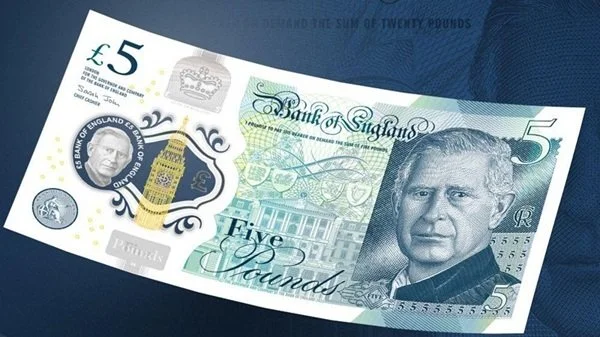
A King Charles III £5 banknote. Certain examples bearing exceptionally low CA01 serial numbers have attracted substantial prices at specialist auctions. Image: Bank of England
Residents across Newcastle Great Park and the wider North East are being encouraged to take a closer look at their £5 notes after collectors highlighted special serial numbers that could make certain King Charles III banknotes worth considerably more than their face value.
A seemingly ordinary £5 note tucked inside a wallet, purse or drawer could be worth checking before it is spent.
Certain banknotes featuring King Charles III have attracted significant interest among collectors, with some early examples selling for hundreds or even thousands of pounds at auction.
The key detail to look for is the serial number printed on the note, particularly those beginning with CA01.
However, experts and collectors distinguish between the first notes issued, exceptionally low serial numbers and ordinary examples. Simply finding a £5 note bearing the King's portrait does not make it valuable.
What makes some King Charles III £5 notes valuable?
Bank of England notes featuring King Charles III entered circulation on 5 June 2024, marking a historic change to British currency.
It was the first time the Bank of England had changed the monarch portrayed on its banknotes, following more than six decades of notes featuring Queen Elizabeth II.
The King's portrait appeared on the existing £5, £10, £20 and £50 polymer banknote designs.
Apart from the change of monarch, the designs remained the same.
The £5 note continues to feature former Prime Minister Sir Winston Churchill on the reverse.
However, as with many newly issued banknotes, collectors have shown particular interest in examples bearing very low serial numbers.
For King Charles III £5 notes, the important prefix to look for is CA01.
This identifies notes from an early production series of the King's £5 banknotes.
Collectors may pay a premium for certain examples, especially those featuring exceptionally low numbers.
But there is an important distinction: not every CA01 note is worth a substantial amount of money.
How to check whether your £5 note could be valuable
If you have a King Charles III £5 note, checking it takes just a few seconds.
First, identify the note by looking for the portrait of King Charles III on the front.
Next, turn it over and locate the serial number.
The Bank of England confirms that £5 notes have unique serial numbers printed horizontally and vertically on the reverse.
The horizontal serial number is positioned towards the bottom right-hand corner.
It consists of letters and numbers, with the sequence potentially looking something like this:
CA01 000003
In this example:
CA01 is the identifying prefix associated with the early King Charles III £5 notes.
000003 is the exceptionally low numerical sequence that makes this particular example especially interesting to collectors.
A note with a serial number beginning CA01 and followed by a very low number may be worth investigating.
Other distinctive patterns, such as repeated digits or unusual numerical sequences, can sometimes also attract interest.
The note's condition, rarity and demand among collectors will influence how much someone might be prepared to pay.
One rare £5 note sold for £11,000
There is genuine evidence that some early King Charles III banknotes have achieved extraordinary prices.
On 13 June 2024, specialist auction house Spink held a charity auction featuring low-numbered King Charles III £5 notes.
Among the notable sales was a £5 note carrying the serial number:
CA01 000003
According to published auction results, the banknote sold for an astonishing £11,000.
Other examples also achieved impressive prices.
A note numbered CA01 000005 sold for £7,000, while CA01 000007 fetched £4,800.
Another example, CA01 000011, sold for £3,500.
These prices demonstrate the enthusiasm some collectors have for exceptionally low serial numbers.
They also show that a banknote's value to a collector can be vastly different from its everyday spending value.
However, the notes were sold through a special charity auction, and their results should not be treated as typical prices for £5 notes found in circulation.
What about reports of £5 notes worth £17,000?
Recent reports have suggested that certain £5 notes could command prices exceeding £17,000.
While some banknotes really have sold for extraordinary amounts, it is important to distinguish between different denominations and completed sales.
The Bank of England's official records confirm that a King Charles III £10 note sold for £17,000 during its 2024 charity auction programme.
That was a £10 note, not a £5 note.
Meanwhile, the verified £11,000 sale of the CA01 000003 banknote provides a clear example of the substantial prices achieved by some rare £5 notes.
Online auction websites can also display notes advertised for thousands of pounds.
However, an asking price is not necessarily evidence of what a buyer will actually pay.
A seller can list a banknote for almost any amount, but its real market value depends on whether someone is willing to purchase it.
For anyone considering selling a potentially valuable note, completed auction results are generally a more useful guide than ambitious online listings.
Even higher serial numbers can attract interest
You do not necessarily need to discover one of the very first notes printed to find something of interest to a collector.
Results from the 2024 Spink auction show that a £5 note numbered CA01 000046 sold for £900.
Another note, CA01 000207, achieved £350.
These are striking sums for notes with a face value of just £5.
However, they remain examples from a specialist charity auction involving carefully selected notes.
They are not a guarantee that another note with a similar number would achieve the same amount in an ordinary private sale.
Collecting trends can change, and the prices paid for individual banknotes can vary considerably.
Does the condition of the note matter?
Yes. Condition can be an important factor when collectors consider purchasing banknotes.
A clean, crisp note without folds, creases, tears or other damage may be more desirable than a heavily worn example.
Banknotes that have been preserved in excellent condition can therefore attract more interest.
If you believe you have found a collectible £5 note, it is sensible to avoid unnecessary handling or folding.
You should also avoid attempting to clean, iron or otherwise alter it, as this could damage the note.
For potentially valuable examples, a reputable banknote dealer or specialist auction house can provide guidance.
Why were the rare notes auctioned?
The Bank of England has a history of setting aside specially numbered banknotes for charity auctions when new designs are introduced.
The King Charles III banknotes were no exception.
During the summer of 2024, Spink held four auctions covering the £5, £10, £20 and £50 denominations.
The Bank of England confirmed that the auctions and associated public ballot raised £914,447 for ten charities.
Among those benefiting were The Childhood Trust, The Trussell Trust, Shout, Carers UK, The Brain Tumour Charity, London’s Air Ambulance Charity and Samaritans.
The fundraising initiative demonstrated how the interest in rare banknotes could be used to support charitable causes.
It also contributed to the remarkable prices achieved by certain examples.
Are ordinary King Charles £5 notes still worth £5?
Absolutely.
Most King Charles III £5 notes should be regarded as ordinary currency unless there is a specific reason to believe they are collectible.
A banknote does not automatically become rare because it carries the King's portrait.
The Bank of England has also confirmed that notes featuring Queen Elizabeth II remain legal tender and continue to circulate alongside those featuring King Charles III.
There is no requirement to exchange older Queen Elizabeth II notes simply because a newer portrait is now available.
The Bank of England itself values the notes it issues at their face value, although private collectors may choose to pay more for particularly desirable examples.
For anyone who discovers a CA01 note, the sensible approach is to check its complete serial number and investigate comparable completed sales before assuming it is worth a premium.
Could someone in Newcastle Great Park have a rare £5 note?
It is possible that a local resident could come across an interesting serial number in their change, although there is no guarantee.
King Charles III banknotes have been circulating since June 2024, meaning residents may have received them while shopping, withdrawing cash or making everyday purchases.
For those who still use cash, the next £5 note received from a supermarket, café or local shop might be worth a second glance.
Checking the serial number costs nothing, and most notes will simply turn out to be worth their normal £5.
But the confirmed auction results show why certain examples have become sought-after collectors' items.
The most important thing is to check the entire serial number rather than relying on the CA01 prefix alone.
Have you checked your £5 notes?
The Great Park Gazette would love to hear from local residents who collect unusual coins and banknotes or who have discovered interesting serial numbers in their change.
Have you ever found a particularly low-numbered banknote?
Do you have a King Charles III £5 note beginning with CA01?
Or have you kept a special banknote as a souvenir?
Let us know through the Great Park Residents Group on Facebook.
You never know what might be hiding in your wallet!
Sources and further reading
Bank of England – King Charles III banknotes
https://www.bankofengland.co.uk/banknotes/king-charles-banknotes
Bank of England – How much is a banknote worth?
https://www.bankofengland.co.uk/explainers/how-much-is-a-banknote-worth
Bank of England – £5 note design and security features
https://www.bankofengland.co.uk/banknotes/5-pound-note
Bank of England – King Charles III banknote auctions raise £914,447 for charity
Spink – King Charles III £5 charity auction results, 13 June 2024

