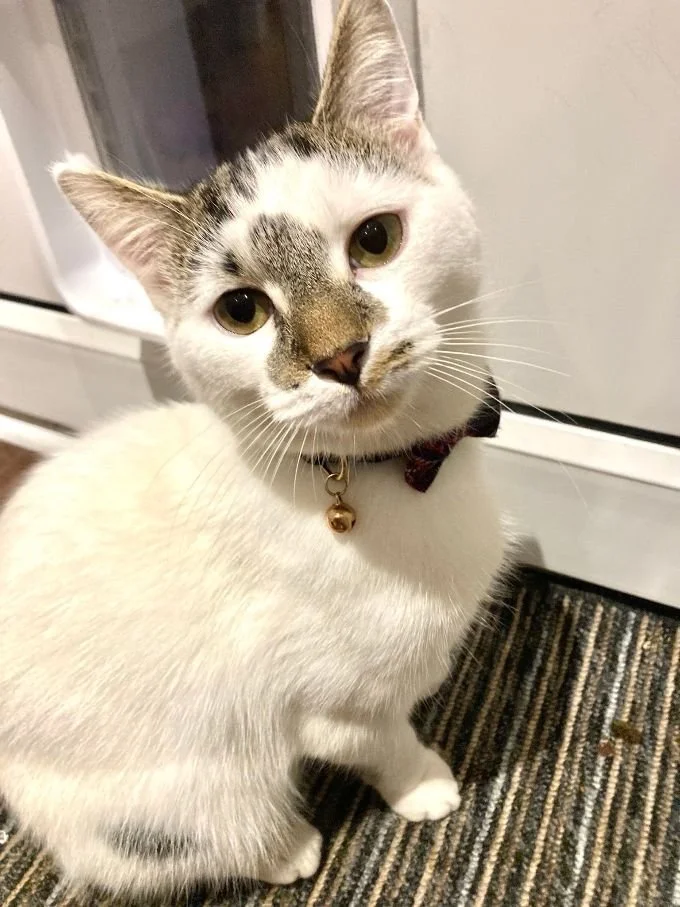
When eight-month-old Monty was hit by a car, a stranger on her way to work stopped and took him to a vet. His owner, Amy, wants drivers in Great Park and across the country to have a legal duty to stop, check and report when they know they have hit a cat.
The cat who waited in the window
“He had his adventures, but he always came home,” Amy told the Gazette. Every morning he would go out for about an hour, then come back for a cuddle. She describes him as loving, mischievous and cheeky, a member of the family who made her laugh and whose place nobody else could fill.
Amy met Monty when she went with a friend to collect his brother. Six days later, on 19 September 2021, she brought him home. In her account for CatsMatter, she remembers the cat who waited at the window for her, tore through new net curtains in a day and hid at the end of the corridor, ready to pounce when she peeped round the corner.
On 31 March 2022, Monty went out at his usual time, around half past six. While getting ready for work, Amy noticed a missed call from her vet. When she rang back, the practice asked whether she had a white and tabby cat. Monty had died.
The woman who had found him left her details with the practice. She later told Amy she had wrapped him in a blanket and spoken to him all the way to the vet. Amy says she will never know whether earlier help could have saved him. She remembers the kindness of the person who stopped.
Amy still wishes she had kept Monty in that morning. She says the driver did not stop. Even if treatment could not have saved him, knowing somebody had stopped to get him help would have made her grief easier to bear. It was nearly five years, she says, before she felt ready to turn those unanswered questions into a campaign.
What Amy wants to change
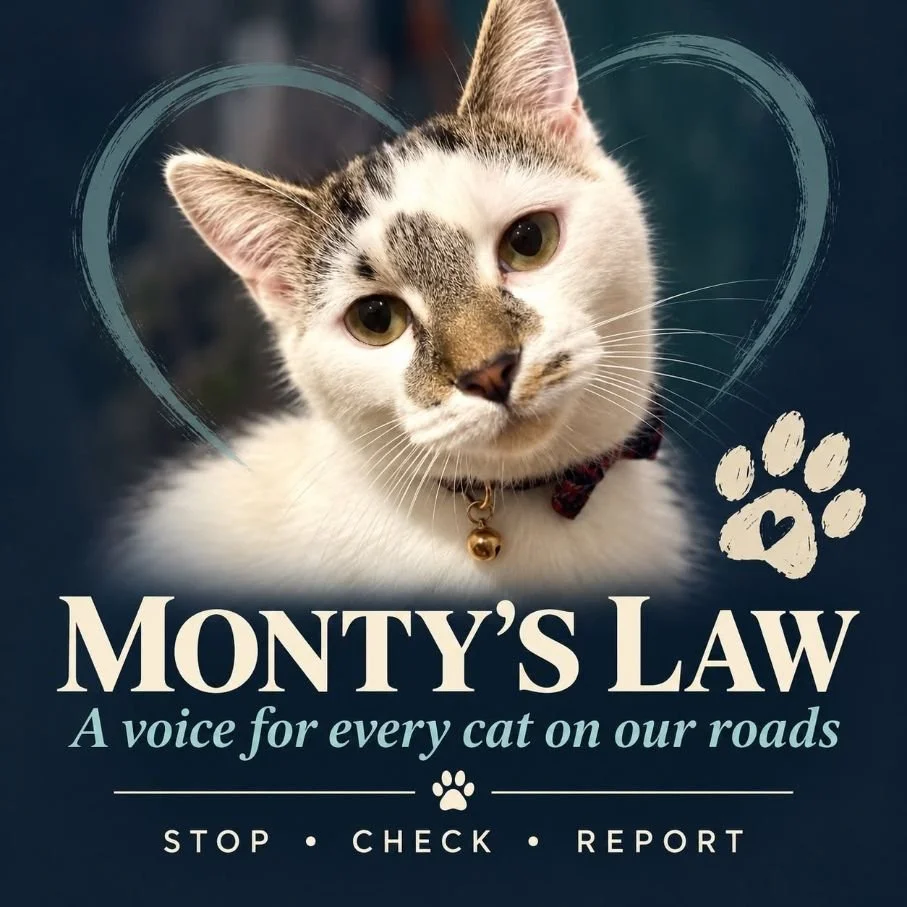
CatsMatter’s original petition drew parliamentary attention. Amy says her Monty’s Law campaign has reached thousands of people across the country and is seeking to work alongside CatsMatter to change the law. She wrote: “At its heart, Monty’s Law is about one simple principle: if a driver knows they have hit a cat, they should be required to stop when safe to do so, check on the animal and report the collision.”
In Great Park, section 170 of the Road Traffic Act 1988 covers collisions involving dogs, horses, cattle, donkeys, mules, sheep, pigs and goats. Cats are missing from that list. Injury to a cat alone does not trigger the section’s stopping and reporting duties. A collision that also injures another person or damages another vehicle can still trigger them.
What would reporting look like after dark?
Amy asks a driver who knows they have hit a cat to pull over as soon as it is safe, check on the animal and call a veterinary practice or animal welfare organisation for advice. If the road is too dangerous to stop on, she asks drivers to call from a safe place and give the location so someone can arrange help. “They might be nothing to you, but they are something to someone.”
She would like one telephone reporting service that works at night as well as during the day. A driver could say where they were and what happened, and the service could pass that information to a vet or welfare organisation. She wants government to design it with veterinary professionals, animal welfare groups, road safety experts and people who run similar systems overseas.
Why the campaign points to Jersey
On the campaign blog, Amy asks what Britain could learn from Jersey. The island already has a rule specifically for cats. Under Article 52 of Jersey’s Road Traffic Law, a driver who hits a cat must stop as soon as it is safe or reasonably practicable and tell the person responsible for the cat, or a body named in the island’s code, when it happened and where the cat was last seen.
That last detail matters if a frightened cat runs away. Someone can still pass on a time and a place to start looking. Jersey’s law also makes allowance for a driver who did not know, and had no reason to suspect, that they had hit a cat.
What Amy wants from MPs
Amy says she thought she would be lucky to reach 50 followers. Since then, people have shared stories of losing their own cats, the campaign has attracted media interest and she has had conversations with MPs and government representatives. She has also written to many MPs and organisations and says relatively few have given her a meaningful response.
She welcomes compulsory microchipping. A chip can tell a vet who owns a cat once someone brings it in. Amy wants the Government to address what happens before that point, when an injured animal is still at the roadside. She is asking ministers to consider the issue in its own right and work with vets, welfare organisations and countries that already have reporting arrangements.
The cost of telling Monty’s story
Reading other owners’ stories and recounting Monty’s death brings back her grief, Amy says. Alongside the support there have been unanswered emails, unpleasant comments and suggestions that owners are to blame for letting cats outside. Even a cat kept indoors can escape, she points out. Wherever it came from, she wants it to have a chance of receiving help.
“I want his name to mean something, and I want something positive to come from the loss of a little cat who was so loved,” she told the Gazette.
What Great Park residents can do
If you find an injured cat, GOV.UK explains how to report an injured animal. If a cat has died on a public street in Great Park, Newcastle City Council takes reports online or on 0191 278 7878 (ask for Your Local Services). Give the location, the colour of the animal and whether it is safe to reach. Cats and dogs collected by the council are checked for a microchip at Byker, which can help a family find out what happened to their pet.
Readers can follow Monty’s Law on Facebook or subscribe to Amy’s blog. The Facebook page has around 4,400 followers and follows 12 accounts. Amy asks Great Park residents to share the campaign’s posts, tell their own stories and write to their MP asking them to support Monty’s Law. She says those conversations can help turn public support into parliamentary action. “Help me turn Monty’s ending into something positive.”