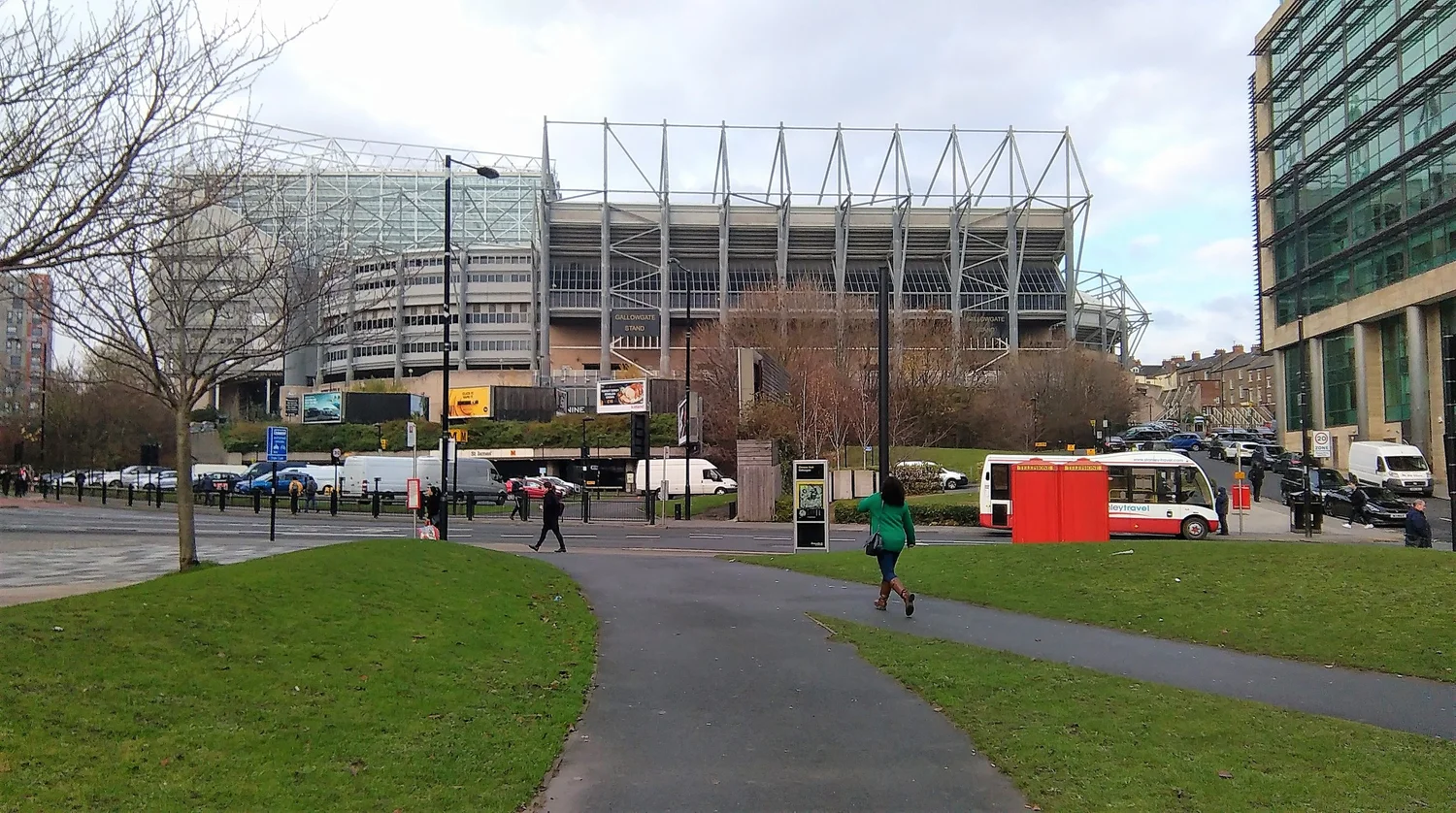
St James’ Park is in contention to host a 2035 Women’s World Cup semi-final after FIFA awarded the tournament to the UK. For Newcastle United fans in Great Park, the bid puts the club’s current home in the spotlight while its stadium decision remains open.
Newcastle and Sunderland both in the running
FIFA confirmed England, Northern Ireland, Scotland and Wales as joint hosts at its Extraordinary Congress on 23 November 2026. It will be the first FIFA World Cup staged in the UK since 1966. The tournament is planned for 48 teams and 104 matches. Read the Football Association’s announcement.
FIFA evaluated 19 stadiums, including St James’ Park and Sunderland’s Stadium of Light. The wider bid also lists potential grounds that FIFA has yet to assess. Newcastle’s bid is part of a city-wide effort to bring matches to the North East, with the club and Newcastle City Council backing it. The tournament’s final venue list and match allocations are still to be decided.
What it means for Newcastle’s stadium decision
Newcastle United’s owners, Saudi Arabia’s Public Investment Fund, are weighing redevelopment of the club’s home of more than 125 years against a purpose-built stadium that could cost around £1 billion. The club has yet to announce its choice. St James’ Park was assessed in its current form. Old Trafford’s assessment, by comparison, explicitly allows for a fresh review if Manchester United’s proposed 100,000-seat replacement is ready in time.
A completed replacement in Newcastle could still put itself in contention, subject to timing and FIFA assessment. Council leader Colin Ferguson said the stadium decision rests with the club and expressed confidence that Newcastle could showcase women’s football in 2035 whichever ground the club calls home. He joined Newcastle United’s director of women’s football Grace Williams and midfielder Jordan Nobbs at St James’ Park to mark the announcement.
What St James’ Park would need for a semi-final
The FIFA bid evaluation puts gross capacity at around 52,300 seats, above the minimum for a semi-final. The ground has hosted Premier League and international football and is scheduled to stage UEFA EURO 2028 matches. It has several access routes, with public transport hubs within walking distance. Nearby public parking is limited, around 230 spaces have been identified for FIFA groups, and Newcastle International Airport is about 10 km away.
Hospitality seating is about 28% below the semi-final benchmark, although VIP and VVIP seating meets the requirements. A semi-final could require operational changes agreed with the stadium authority. Accessible seating also falls below the minimum, and the stadium authority has committed to upgrades before the tournament.
FIFA found that the stadium orientation and pitch dimensions meet its requirements. The hybrid pitch was assessed positively, although the space around it is relatively limited. The roof covers the media and VIP tribunes. The ground has two grid connections, power distribution across different stands and a building management system.
New floodlights installed before the 2026–27 season and replacement giant screens are expected to meet FIFA’s standards. Telecommunications and IT meet minimum requirements and have backup capacity. The site plan allows for temporary facilities and reconfiguration, and the bid says the ground is expected to meet green building certification requirements by 2035. Capacity expansion remains under study, with scope and timing still to be set.
What Great Park readers should watch
There are two decisions ahead: where Newcastle United will play its club football and which venues FIFA will choose for 2035. The Gazette has already covered the stadium options discussed at Leazes Park and Woolsington. For Great Park fans, the eventual venue will shape matchday travel and access, but fixtures and travel plans are still to come.