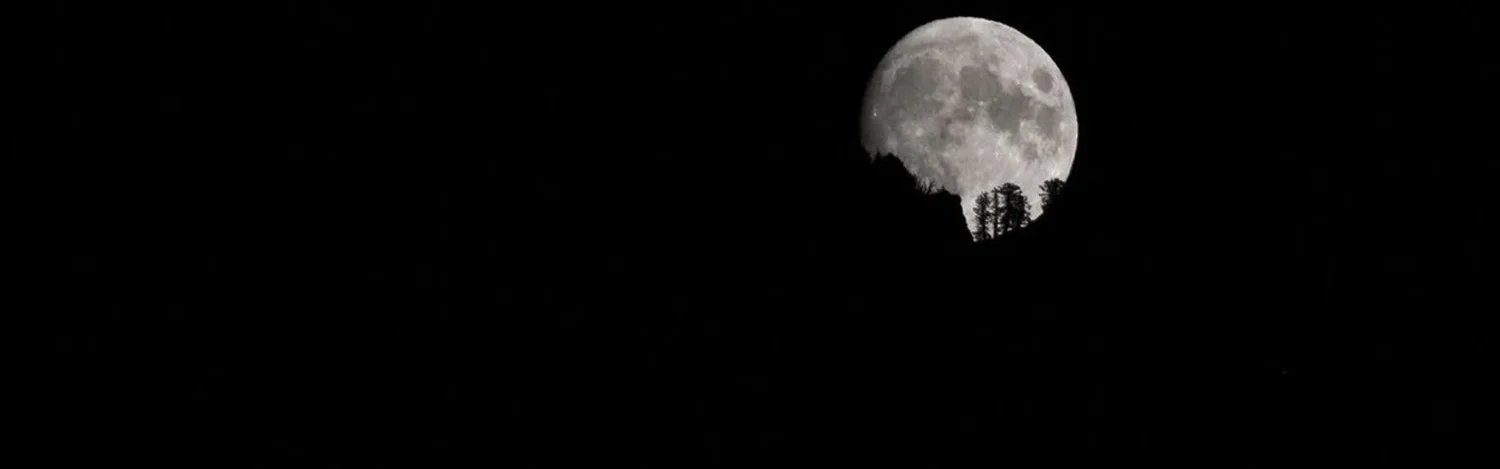
The Beaver supermoon will rise over Newcastle on Tuesday 24 November. From Great Park, look low towards the north-east around dusk if the clouds break.
When to look from Great Park
The Moon reaches its full phase at about 2.54pm GMT, according to NASA. Time and Date’s Newcastle table puts moonrise at about 2.59pm, with sunset around 3.50pm. The Moon will still look full through the evening, so there’s no need to catch the exact moment.
Look for a gap in the clouds from about 3.50pm onwards. An open view towards the north-east will give you the best chance of seeing it low in the sky. If houses or trees block your view, wait until the Moon climbs higher. A telescope is optional.
Clear spells may favour some parts of Scotland, northern England and Wales over the next few days. Closer to home, the Met Office forecast for Newcastle Airport shows Tuesday’s light rain giving way to overcast skies. If cloud hides the Moon on Tuesday, it will still look nearly full on Wednesday.
What makes a supermoon?
The Moon travels around Earth in an oval orbit, and its distance varies from roughly 360,000km to 400,000km. Its closest point is called perigee. Supermoon is an informal name for a full Moon near that point. NASA uses a rule of thumb that it should be at least 90% of the way from its farthest point towards perigee.
NASA says a closely placed full Moon can look up to 14% larger and 30% brighter than the faintest full Moon of the year, when it is farthest from Earth. The difference can be hard to judge by eye. A closer Moon can also contribute to higher tides.
Near the horizon, the Moon often looks bigger beside familiar objects such as trees and buildings. That is the Moon illusion. It is separate from the small change in apparent size caused by the Moon’s distance from Earth.
Why it’s called the Beaver Moon
Beaver Moon is a traditional name for November’s full Moon. One explanation connects it with the time of year when beavers prepare their lodges and store food for winter. May’s Flower Moon and June’s Strawberry Moon are other seasonal names. The name applies to November’s full Moon whether or not it qualifies as a supermoon.
The next full supermoons
Supermoons often come in runs of three or four. November’s is the most distant and smallest of the four in this run. The Christmas Eve Cold Moon on 24 December will be the closest of the series, followed by full supermoons on 22 January and 20 February 2027 under Time and Date’s definition. The exact number in a run can vary with the definition used.